
Here we are in the final edition of our three-part branding series.
Today’s edition is all about advertising and spreading your brand’s message far and wide!
The goal? To reach your target audience, leave a positive impression, and positively impact many lives. If you haven’t read part one and part two of this exciting series, check ’em out.
Without further ado, let’s discuss how you can promote your brand most effectively and efficiently with a few of our top-recommended advertising tactics for this year.
Market Overwhelm Strategy
Market Overwhelm is a powerful advertising strategy we coined here at Vavoza. The primary objective of this strategy is to influence perception and create a powerful connection with a segment of your target audience using paid ads.
The idea is to make a segment of your target audience see your brand all over the internet and “overwhelm” them with personalized content from your brand.
Your promotional content is meant to provide value to your audience, build rapport, boost your brand’s credibility and authority, influence consideration, and push your leads further down the marketing funnel.
You may notice us discussing Market Overwhelm in various articles from slightly different angles, but today, we will share how to implement this strategy for building your brand.
- Disclaimer: We do not recommend implementing this strategy for complete beginners. This advanced strategy is for people who are familiar with ad platforms’ functions and features.
We will not get into all the small details, such as where to click and how to set up each individual component.
We recommend that beginners familiarize themselves with ad platforms such as Google Ads by reviewing the free step-by-step training provided by Google via Skillshop and our beginner-friendly YouTube Ads course.
Step 1: Research & Identify
Everything in successful marketing starts with research. Spend time researching and understanding your target audience. Know their main pain points, problems, and desires.
With Market Overwhelm, your initial goal is to identify one very specific pain point in your target audience so that you can focus your brand’s messages on that very specific problem.
Here are some questions you can ask yourself when conducting research:
- What does my target audience truly desire that my brand can offer them?
- What are some of their top frustrations when dealing with brands like mine?
- What do they like and dislike about the kind of products or services we provide?
Having this kind of insight into your audience is crucial because it allows you to hook, connect, attract, and convert your target audience more effectively.
Step 2: Produce Promotional Content
Once you conduct research and identify the specific pain point you want to focus on, create promotional content around it. All your promotional content must be strategic and deliberate.
Create promotional videos, images, headlines, descriptions, and call-to-actions (CTAs). You’ll have to modify the length of your content depending on which platform you choose to advertise on and the type of ad you run.
Create a unique set of ads for each objective.
For example, one set of ads will be used to attract a “cold” audience for the first time, and another set will be used to retarget people who have viewed your content and/or visited your landing page.
The messages in your ads will vary depending on whether you are targeting an audience for the first time or retargeting them after they have interacted with your brand in some way (more on this later).
Step 3: Target & Tag
Create the cold audiences you want to target inside the ad platform of your choice and start showing your first set of ads to them.
Now, it’s important to note that even if you target a very specific cold audience, in most cases, it will still be a large audience, and you will not reach market overwhelm targeting a cold audience unless you have a significant budget.
Therefore, your first objective is to target a cold audience and tag people who engage with your ads to create retargeting audience segments that you can overwhelm with your content. The larger the audience, the harder it is to create market overwhelm.
As you run cold ads, build up as many retargeting audience segments as needed (depending on your funnel setup).
- For example, one audience will consist of landing page visitors, and another audience will consist of “video viewers.”
- You can also create retargeting audiences from people who opted in on your landing page, people who saw your offer but didn’t make a purchase, and buyers.
Create a unique audience segment for every stage of your marketing funnel. Track as many data points as possible and create hyper-personalized retargeting ads for each audience segment.
Step 4: Retarget & Overwhelm
This next part is what this strategy is all about. Now that you have identified, targeted, and tagged segments of your target audience, it’s time to overwhelm them with your brand.
Retarget your segmented audience and show them your promotional content all over the internet.
Make them see your brand everywhere they go. Show them ads on YouTube, Google Search, the Display Network, Facebook, Instagram, etc. The more platforms they see you on, the better.
Now, when we say to show your audience promotional content, we don’t necessarily mean to show them direct-response ads.
Mix it up; show them ads in various formats. Some of your ads can take your audience to your landing page, and others can be used to serve valuable content and nurture them.
Think through your retargeting plan and make sure it makes logical sense.
Remember, the goal is to make your target audience see you all over the internet and push them through your marketing funnel, so make sure to target them with appropriate retargeting messages depending on where they are in the customer journey.
- If someone opted in on your landing page, exclude them from landing page retargeting, and if they purchased your product, exclude them from sales retargeting, and so forth.
Once again, we cannot stress this enough: OVERWHELM your target audience with your brand! Make them see your brand all over the place.
Make them think about your brand all day and dream it all night, and magic will happen over time.
Step 5: Cycle & Scale
You don’t want to keep your audience segments in your retargeting pools forever. Not everyone will convert, and that’s okay.
In advertising, we focus on maximizing the conversion rate and volume while understanding that not everyone will convert regardless of our efforts.
Keep people in the appropriate retargeting audiences for as long as you believe you need to nurture them to convert them.
It’s hard to say definitively how long you should keep people in your retargeting audiences (and how big they should be) because it all depends on how long it takes you, on average, to convert a visitor into a buyer.
So, start by keeping people in your retargeting audiences for 90 days, and adjust accordingly.
Remember, you want to achieve market overwhelm, so depending on your budget, you may want to expand or decrease your retargeting lists.
The larger your budget, the larger the audience you can overwhelm with your ads.
If you’re working with a small budget, aim for 1,000 people in each audience segment, and adjust accordingly.
Short-form Content
Digital media has become an integral part of everyone’s lives. We can no longer imagine our mornings without newsletter updates, Instagram stories, and YouTube videos.
Ever notice how if something is too long and has too many unnecessary aspects, we tend to scroll right past it?
Is it our attention span to blame? Or is it that most content got boring?
Whether or not it’s our attention span or the content itself, the fact remains – videos, posts, and news that are overly long and “wordy” tend to get ignored, skipped, and scrolled on, which is why short-form content has been gaining tremendous popularity.
Mobile internet usage has made it possible for people to consume information quickly and on the go, and short-form content has become one of the most crucial aspects of digital marketing today.
So, if you want to reach a broad audience quickly and efficiently, we highly recommend short-form content as your go-to organic marketing tactic.
Nuts & Bolts
People go online to have fun, learn something new, and catch up on recent news and trends. Therefore, your primary goal when creating short-form content should be to make it useful and engaging, or entertaining and engaging.
The common denominator? Engaging.
The goal is to capture viewers’ attention within the first 3 seconds of your post or video. If you don’t, you’ll likely get “scrolled.”
If you choose to implement this tactic, play the volume game and post content daily or on another consistent cadence.
Also, keep your content niche-specific. If you post about everything constantly, your audience might lose track of your brand’s purpose and values.
Last, but not least, remember to add a branding element to all your short-form content. You want people to associate all your content with your brand, so show your logo, keep the colors congruent to your brand, and be mindful of the tone and “vibe” of your content to ensure it matches your brand’s persona.
TikToks, Reels, & Shorts
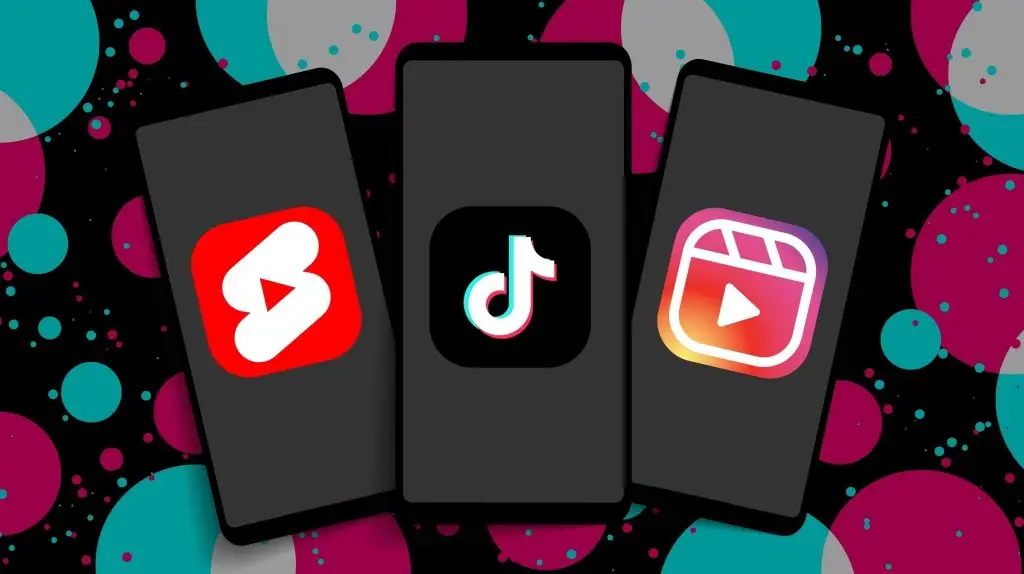
Short-form video content has recently gained and kept its popularity in the social media world (and it’s here to stay). TikToks, Instagram Reels, and YouTube Shorts are all forms of short-form video content, and all three are meant to engage consumers quickly, efficiently, and effectively.
Here are some guidelines to follow when creating content for each respective platform:
TikTok
TikTok has become one of the most influential social media platforms globally since its launch, especially among younger audiences. Its algorithm is known for creating a highly personalized feed for any user on the platform.
- Engagement: Just like other platforms, TikTok prioritizes content that users find engaging. Videos on TikTok can be anywhere from 15 seconds to 3 minutes long.
- Trends: Participating in trending challenges and editing your videos to fit trending templates will increase the chances of your video getting promoted by the algorithm. Including trending music and sound effects in your videos will also benefit you.
- Niche: TikTok’s algorithm is quite good at identifying and personalizing content for each of its many users, so keeping your videos within a single niche will ensure they reach an audience interested in your subject.
Instagram & FB Reels
Instagram Reels have taken the industry by storm in recent years, and now, Reels are increasingly becoming more popular on Facebook, too. At the time of this article’s release, you can post Reels that are up to 90 seconds long.
- Video Quality: High-quality videos tend to get more views and engagement. Engagingly relay your message, and make your video visually and audibly appealing: stable, clear, and well-lit.
Editing Reels can be quite easy with third-party apps like CapCut, Canva, and AdobeRush. - Relevance: Using relevant hashtags and captions helps the algorithm categorize and understand your content. That way, your video can be seen by those who actively engage with similar videos.
- Originality: Ensure your content is original, without watermarks from other platforms or creators or copyright violations. Also, stay away from AI-generated content. People tend to lean more towards authenticity, and so does the algorithm.
- Consistency: Posting regularly will help maintain your Reels’ visibility and boost your organic reach. Consider posting at least 3-5 Reels a week for optimal performance, but the more high-quality Reels you post consistently, the better.
YouTube Shorts
Shortly after (no pun intended) Instagram’s Reels were rolled out (or should we say, “reeled out”), YouTube followed by launching YouTube Shorts.
Shorts can be up to 180 seconds long, though some creators say that the algorithm prefers shorter content.
- The FFS Rule: The First Few Seconds (FFS) matter! Your Short should capture attention almost immediately so that the audience will stay and engage with the video. The longer the user stays and interacts with your Short, the higher the likelihood of it being boosted by YouTube’s algorithm.
- Hashtags: YouTube uses hashtags to push your content out to the appropriate audience. You may have a great video with quality information, but unless it is properly “hashtagged,” your Short will fall to the bottom of the list.
- Originality: YouTube is being flooded by Shorts with AI-generated voiceovers – some people enjoy those videos, and others can’t stand them. Rumor has it that YouTube will soon start to throttle and demonetize AI-generated content, and rightfully so.
Remember, you can’t go wrong with creating original content on any platform. Be real and show your brand’s original and unique identity.
Short Daily Newsletters
Attention is the new currency. Countless ambitious brands and marketers are constantly competing for your audience’s limited attention, and if you don’t do your part to keep your audience engaged, your brand will not stay at the top of their minds.
Short daily newsletters are one of the most effective ways to connect with your audience and keep them engaged with your brand.
The best part? Connecting with your audience via email doesn’t require appeasing social media platforms and their algorithms – you are in full control of what you send and who sees your content.
Now, it’s important to consider that not everyone appreciates daily newsletters; some people don’t enjoy receiving emails, period.
So, we recommend creating a separate email list for your short daily newsletters so that if someone unsubscribes from your daily list, they will stay active on one of your other lists.
This is exactly what we did at Vavoza in the past:
- When someone subscribed to Vavoza Insider, they were added to our main list and our daily newsletter list.
When someone unsubscribed from our daily list, they stayed active on our main list. When someone unsubscribed from our main list, they were unsubscribed from our daily list, too, (because we didn’t want people to feel spammed).
In full disclosure, we don’t do this anymore as Vavoza Insider is no longer a weekly newsletter but rather a daily one.
Another great example is Neil Patel’s newsletter. Neil’s short newsletters typically include quick SEO tips with links to his longer blog posts and software.
Yet another perfect example is the Google Trends newsletter, which consists of quick breakdowns of the latest trends based on Google searches.
The key is being consistent, niche-oriented, helpful, and original. And remember, authenticity applies to any form of content you produce, including newsletters.

Closing Remarks
With that, we put a big red (or rather blue for Vavoza) bow on our three-part branding series!
In this series, we emphasized authenticity because we genuinely believe the world is being deprived of originality and authenticity.
We wanted to remind all modern marketers, such as yourself, about the power of authenticity in marketing, as detailed in the first edition of this series.
The branding principles shared in this series come from our many years of real-world experience managing multimillion-dollar marketing campaigns, backed by professional research from our team.
Our goal was to highlight the top branding principles that matter most today, and we hope you derived a lot of value for your business from this series.