


Hey Insider,
This is Vlad, the founder of Vavoza. I’m excited to share actionable business and marketing insights with you in this exclusive Vavoza Insider Plus edition.
In this article, I will share the top lessons we learned in 2024 and how to ensure your 2025 (and 2026 as we plan ahead) is better and more prosperous than ever.
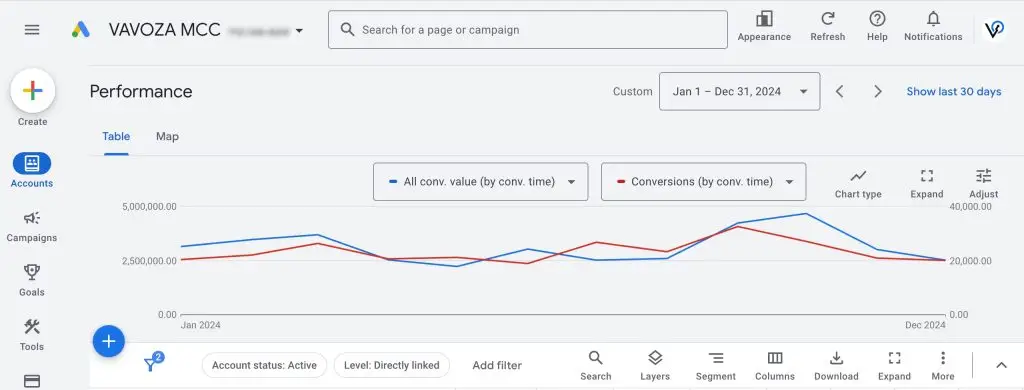
As a marketing agency, we often look into and live in the future. We must constantly predict and anticipate change while doing our best work in the present to serve our clients (and produce the results they demand).
For years, my team and I have emphasized various marketing ideas, principles, and predictions, which have now come to fruition in full swing. I will continue emphasizing the most crucial ideas and principles and explain my reasoning for them.
You will notice that my primary focus in this letter will be scalability. More specifically, I will discuss positioning your business for high and rapid scalability and how to eliminate growth hindrances.
I will also share actionable marketing tips and ideas based on our agency’s experience in 2024 and early 2025.
Enjoy this content, and use our insight to grow your business and earn more money this year.
Top 5 Lessons Learned In 2025
In this section, I will touch on the top lessons we learned as an agency in 2024, building upon each lesson throughout this letter. Let’s get right into it!
1) Discipline In Managing Campaigns
Throughout the years, we took different approaches to launching and scaling our clients’ ad campaigns. Until recently, we scaled campaigns rather aggressively.
For instance, when we launched new campaigns, we quickly increased the daily budget and “Target CPA” bids at the earliest signs of results (sales). This often allowed us to scale ad campaigns from zero to thousands of dollars in daily revenue within a week of launching.
- FYI: Target CPA is a type of bidding strategy that allows you to set a “target cost per action” to generate conversions at a certain cost per conversion on average.
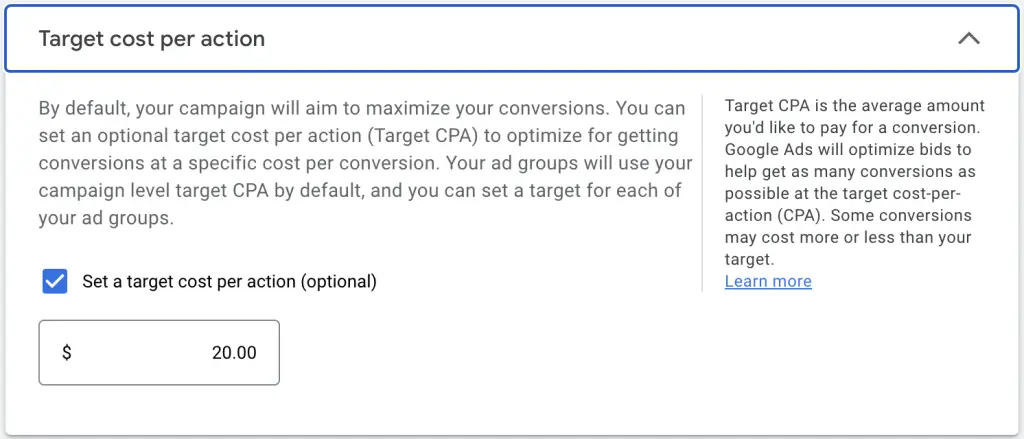
Similarly, when the campaigns weren’t performing optimally, we often decreased the bids and made other changes to ensure that they always performed and produced a certain return on ad spend (ROAS).
This worked well; it allowed us to consistently maintain a certain ROAS while fluctuating the daily ad spend.
However, in 2024, we noticed that even the slightest tweaks to the daily budget and the Target CPA bids caused campaigns to become unstable. This resulted in severe performance fluctuations and lower average ROAS.
Fortunately, we discovered the solution: discipline and time. It’s not a “new” solution, but it’s required today much more than in previous years.
Nowadays, instead of scaling campaigns quickly, we allow them to run at an initial daily budget and Target CPA bid for an extended period of time without making any changes, regardless of whether the initial performance is good or bad.
This approach is not ideal for someone who wants to scale up quickly, but it’s necessary for stability and sustainable scalability.
It appears that today, it’s worth following Google’s recommendation to allow campaigns to run for at least 14 days without making any changes. This gives the algorithm adequate time to learn and stabilize the campaign after every optimization or change.
Otherwise, the algorithm becomes confused, and it reflects in the campaigns’ poor and inconsistent performance.
2) Platform Dependency (Again)
My team and I addressed platform dependency in the last yearly recap, but I’ll say it again this year: do everything in your power not to rely on third-party platforms to scale your business.
You want to (and should) use advertising platforms to grow your business, but you don’t want to be at their mercy… because they change A LOT.
So, how do you ensure that you leverage ad platforms but don’t rely on them more than necessary?
How do you ensure that your campaigns are stable and scalable without continually having to make many complex optimizations to maintain performance?
The answer is low-ticket paid funnels.
Instead of promoting a free lead magnet, consider promoting a low-ticket offer directly on the front end. Sell something priced at $5-20 and optimize for driving buyers into your sales funnel at an appropriate cost per acquisition (more on this later).
In the past, I was reluctant to run paid funnels because of the high cost per customer acquisition. I thought the high cost per acquisition (the cost to acquire a paying customer) would make the overall funnel unprofitable.
It always made more sense to generate a high volume of free leads first, and then convert them into buyers later…
But then, I realized that the high cost of acquiring a paid lead is only a problem if the sales funnel and offers are not structured correctly.
My team and I also learned the hard way that free funnels can become extremely unpredictable, unstable, and unscalable due to the lack of consistent performance (this negatively impacts the client-agency relationship).
Today, I’m a big advocate for paid funnels, and I encourage all our clients to focus on generating paid leads instead of free ones because this approach allows for reaching a higher and more stable scale.
Your low-ticket buyers are your leads, and your goal is to convert them into multiple, higher-priced backend offers (or even additional low-ticket offers), which is where you generate a high profit on your overall funnel.
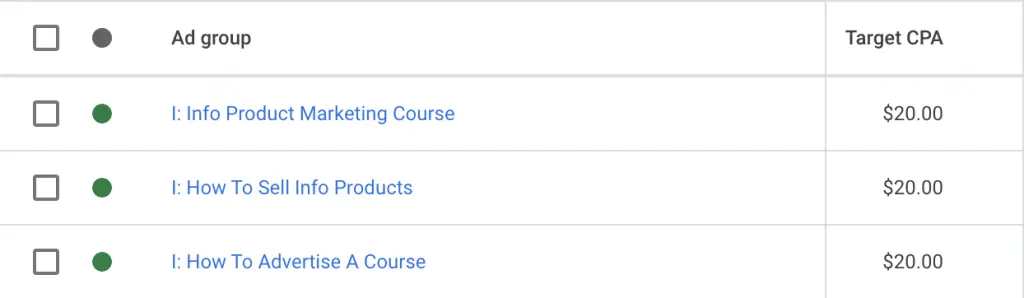
What is an “appropriate” cost per acquisition (CPA)?
The Target CPA to acquire paid leads is largely determined by your overall return on ad spend (ROAS).
- Let’s say your target overall ROAS is 300% ($3 in revenue for every $1 you invest in advertising).
If your ROAS is lower than 300% after your backend offers, you may need to decrease your paid lead cost by lowering your Target CPA bids.
However, if your ROAS is higher than 300%, you may want to experiment with a higher lead cost and see if it allows you to drive a higher volume of paid leads, which would result in more backend sales and a higher profit.
You may also want to experiment with decreasing your Target CPA bids to drive a higher volume of leads more efficiently. However, to ensure that the lead quality remains high, it’s important to find a good balance between the lead magnet price and lead volume.
That being said, generally, you can expect to pay around 5X the price of your lead magnet to acquire a paid lead, with the minimum CPA being higher than what you would normally pay for a free lead – so, set realistic targets.
Once your funnel is optimized and the ad platform’s algorithm learns how to generate paid leads at an appropriate CPA, your only concern for scaling becomes the high lead cost.
That’s just one variable vs. countless variables associated with free funnels.
If all you have to worry about is a high lead cost, scaling becomes significantly easier. Dealing with just one fluctuating variable (the lead cost) is much better than dealing with all kinds of fluctuating variables that come with free funnels.
With free funnels, the leads you generate can be high-quality or low-quality. You will always have a high number of low-quality leads in the mix who will NOT buy anything you sell, which will significantly impact your sales and ROAS.
The worst part is that, regardless of how well you optimize your campaigns, you will always have many low-quality leads coming into your sales funnel. There will be times when you generate mostly low-quality leads, resulting in very poor-performing days, weeks, and even months.
With paid funnels, however, all the leads you generate are higher quality because they’re all prone to buying from you, even if it’s just a low-ticket product.
As a result, you only rely on the ad platform to optimize for generating paid leads (in the shortest conversion period possible), and you remain in control of your overall funnel’s performance on the backend.
That being said, not all free funnels are made equal.
Some free funnels still work well today. For instance, free webinar funnels can be stable enough to scale when the period from initial conversion to the pitch is short. For maximum stability, consider running just-in-time (JIT) and daily webinars rather than scheduled events.
Remember, you want to decrease the timeframe for when someone becomes a lead to being presented to buy the offer as much as possible, so that the ad platform’s algorithm can continually learn and optimize for sales conversions.
We’ll continue discussing paid funnels at Vavoza, but for now, I hope you got my point.
3) Maximizing Customer Volume
Building upon my previous point, in 2024, it became more evident to us here at Vavoza that high revenue and profit lie in a high volume of customers.
Now, I know that sounds like common sense, but there is a valid argument about whether it’s better to have more but lower-value buyers or fewer but higher-value buyers.
We’ve determined that having more customers with a lower profit margin is better for high scalability than having fewer customers with a higher profit margin.
Why? As I often say, all the money is earned on the backend of the sales funnel, and the more customers you have, the more sales and revenue you can generate on the backend.
The companies we scaled the highest in 2024 were those that could afford to lose more money on the front end of their sales funnels, especially those with paid funnels.
Furthermore, we can clearly see that some of our clients generate a higher overall ROAS but a smaller profit than those who focus more on driving a higher customer volume rather than a higher ROAS percentage.
This lesson also hits home.
As an agency, we’ve taken the approach of having fewer but higher-value clients, which has been great for keeping our operations lean and our company highly profitable. However, it has also presented a domino effect of challenges.
For instance, whenever a few of our high-value clients paused their campaigns to restructure their businesses or to launch new campaigns, our revenue took a significant hit, which led to fluctuations in our monthly revenues.
Fluctuations in monthly revenues forced us to reallocate capital and adjust our priorities, which often meant pausing certain initiatives that could have propelled our company’s growth.
And I can tell you from personal experience that nothing sucks more than being at the mercy of clients to grow your business.
So, I became a firm believer in having more customers, even if it means generating significantly lower short-term profits. In full disclosure, this isn’t the approach we are taking at our agency yet, but we are certainly doing it with our premium newsletter.
My advice to you is to get comfortable with taking a loss on the front end of your sales funnel (as much as you can) if it means getting more customers.
Focus on generating as many customers as possible, serving customers by giving them exactly what they want and need, and maximizing profits on the backend.
How can you maximize backend profits?
Maximizing your backend profits may include selling more products to your existing customers, offering unique high-value deals (such as pre-pay offers or bundles when applicable), encouraging or incentivizing customer referrals, and creating win-win collaborations with third-party companies.
P.S. This is yet another reason why I became a big advocate for paid funnels.
4) Consistency Is King
Consistent monthly revenue is better than occasional high spikes in revenue. At least that’s been my experience, and I’m sure you can figure out why based on what I shared in the previous part.
High revenue spikes are exciting, but they can give you a false sense of security, which often leads to instability and bad decisions.
Fluctuations in revenue can cause uncertainty and force you to change priorities when you least expect to do so.
Also, there may be a day when you want to take out a working capital loan or other funding. Lenders appreciate consistent revenue over high revenue spikes. Being in a good position to accept funding can be crucial to your business’s growth and success.
That being said, if you see an opportunity to spike your revenue, do it! But I highly recommend not counting on big revenue spikes to grow your business – instead, focus on consistent daily, weekly, and monthly sales.
5) Simplify Everything To The Extreme
One of my top priorities in 2025 is to simplify our business as much as possible.
By now, I’ve dealt with just enough entrepreneurial challenges to know that being hyper-proactive is crucial to ensuring long-term sustainability.
Being able to pivot quickly, efficiently, and effortlessly (when necessary) can be the difference between success and failure, and keeping things as simple as possible is key.
We have already removed tons of useless automations, tags, and access rules from our CRM and our site.
We’ve also dialed in our team’s priorities more and optimized our marketing to only focus on what drives real, measurable results for our clients and our company while eliminating things that don’t actually matter.
We consolidated our company’s departments (e.g., Agency, Research, Marketing) so that everyone works together as one team and uses their unique strengths to achieve shared objectives: better serving our members and growing Vavoza.
As you build your business, it’s easy to get carried away with fancy automations, workflows, rules, and processes, but all that complexity can quickly become a problem at the worst times.
For instance, if you have hundreds of automations and workflows, and if you must quickly pivot in your business, you need to go through every automation and workflow and modify it accordingly – and that can suck up a lot of your time and complicate everything.
So, I suggest removing automations, workflows, rules, and processes that don’t significantly impact your business’s efficiency and growth. Instead, focus on what actually drives measurable results (customer, revenue, and profit growth).
My new favorite principle is: Simplify everything to the extreme – the simpler, the better.
Performance Max Campaigns
At our agency, we’ve had a complicated relationship with Google Ads’ Performance Max (PMAX) campaigns over the years. When PMAX was just released in 2021, we immediately jumped on it and tested it for multiple clients.
PMAX was exciting because it generated significantly cheaper leads than regular video ad campaigns, but we quickly learned that those “cheap” leads were essentially worthless because they were not converting into buyers (at least not in the short term).
We continued occasionally testing PMAX over the years, and it never quite did the job, at least not for free lead magnets (aka “free funnels”).
However, fast-forward to 2025, and we love PMAX and highly recommend it, but with a catch: only for low-ticket paid funnels.
Thanks to PMAX, we’ve been able to essentially double multiple clients’ ad spends without increasing their cost per lead (CPL). This is a big deal when your goal is to scale your business without decreasing the return on investment.
So, in this section, I will touch on Performance Max campaigns and how to run them correctly.
How Do We Run PMAX In 2025?
First, it’s important to note that Performance Max was made for rapid scaling. It’s meant to maximize your reach across various platforms to drive volume.
So, before launching your PMAX campaign, consider running regular video ad campaigns first. This allows you to refine your targeting, find your best-performing audience segments, and maximize your performance in the early stages of your marketing campaign.
In my YouTube Ads Pro course, I demonstrate in great detail how to launch, optimize, and scale YouTube video ad campaigns step-by-step.
For PMAX audience targeting, we generally combine the top-performing custom audience segments and the YouTube video viewer segments from regular video ad campaigns in the “signals” settings.
We also add relevant keywords to the “search themes” section (ideally, keywords from high-performing Search-based audience segments).
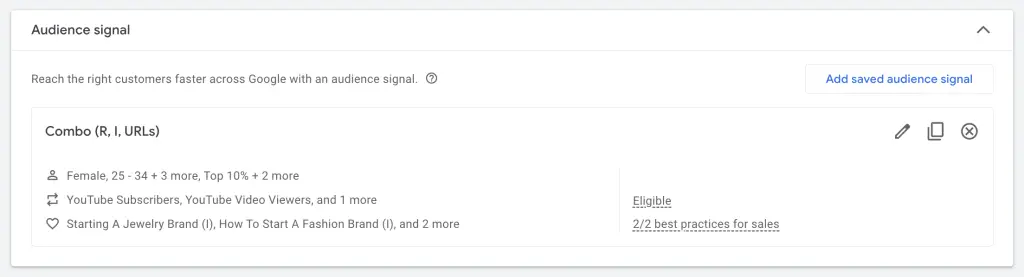
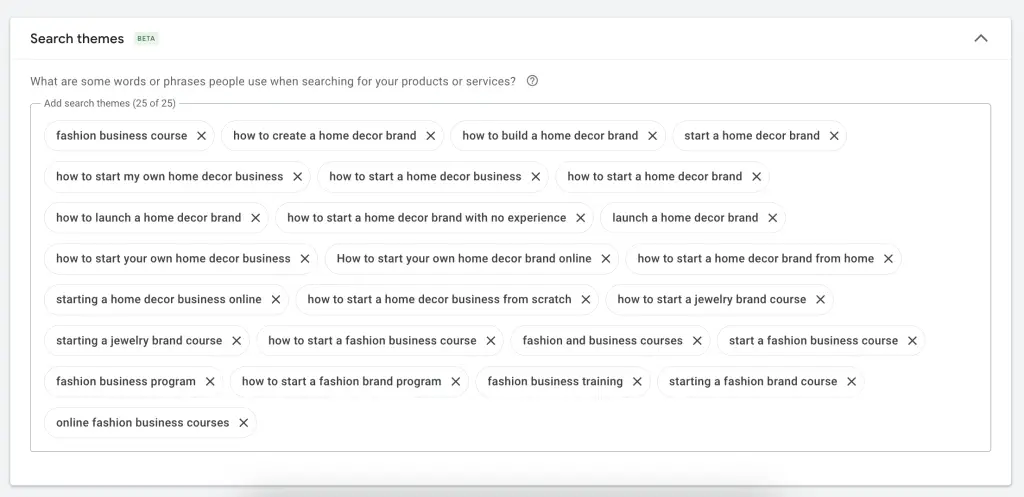
- Note: If you want to learn how to do market research and build custom audiences in Google Ads, check out modules 2 and 3 in YouTube Ads Pro. (Everything in this article will make a lot more sense if you complete the full course.)
Next, we ensure that the “asset group” contains plenty of unique headlines, descriptions, videos, and images relevant to the sales funnel and lead magnet that we promote.

Finally, we specify the conversion goal in the PMAX campaign settings (this is crucial) and set an appropriate daily budget compared to the Target CPA bid.
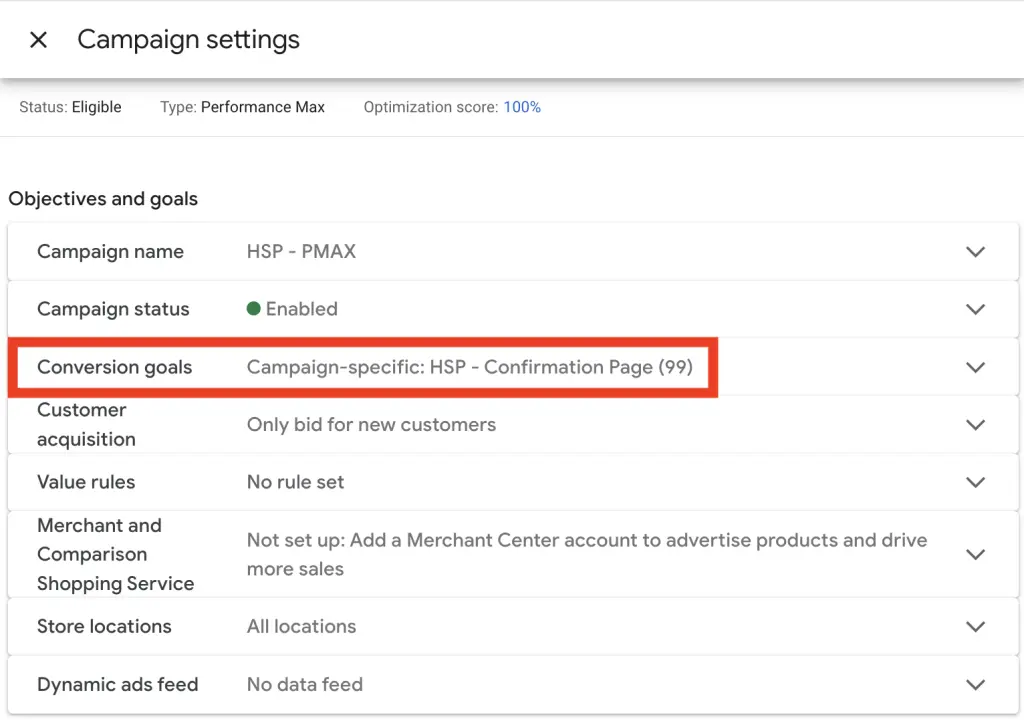
Once again, this should make perfect sense to anyone who studied and completed YouTube Ads Pro.
I also recommend watching my IPM Blueprint crash course to gain a thorough understanding of how strategic marketing and paid advertising work together to produce optimal results.
Why Does PMAX Work So Well?
PMAX works well for low-ticket paid funnels because paid funnels “force” PMAX’s algorithm to optimize for generating buyers rather than cheap leads.
The short conversion path (from ad click to immediate purchase) allows for consistent algorithm training and optimization. This isn’t unique to PMAX campaigns, but it’s a major contributing factor to why PMAX works well for paid funnels.
PMAX is highly scalable because it shows your ads across various platforms and finds optimal placements based on data. This allows you to spend more money without increasing bids as significantly as you would in regular video ad campaigns.
If you’re not using PMAX for your paid funnels yet in 2025, consider testing it.
However, keep in mind that the training period for paid funnels is often long and tedious, so be patient and take your time in training and optimizing your campaigns (as emphasized earlier in this article).
Advanced PMAX Success Tips
For those of you who are technical advertising wizards like our team here at Vavoza, here are a few more advanced tips to ensure maximum results with Performance Max (no pun intended):
- Bidding Strategies: Test conversion bidding strategies, such as Target CPA and Maximize Conversions, and conversion-value bidding strategies, such as Target ROAS and Maximize Conversion Value.
We use both conversion and conversion value bidding strategies in various PMAX campaigns.
However, I recommend using a single-pixel optimization goal (one post-purchase confirmation page pixel) for conversion bidding strategies and a multi-pixel optimization goal (multiple post-purchase confirmation page pixels) for conversion value bidding strategies.
Here’s why:
Conversion bidding focuses on conversion volume, while conversion value bidding focuses on maximizing customer value (and even customer lifetime value when the campaign runs long enough). - Audience Themes: Instead of combining various interest-based custom audiences into one combo audience, consider creating audience themes just as you would for regular video ad campaigns – one theme per PMAX campaign.
This gives you more control for analysis and optimization. Again, refer to modules 2 and 3 in YouTube Ads Pro for a deeper understanding of audience building and theming. - Leverage: You don’t necessarily want to run only PMAX campaigns – run them alongside your regular video ad campaigns. Leverage PMAX to offset your regular video ad campaigns’ CPL and vice versa.
For instance, if your regular video ad campaigns have a higher CPL than PMAX, focus on generating a lower CPL with PMAX.
However, if your PMAX campaigns are crushing it, slow down your regular campaigns by decreasing your Target CPA bids. This will reduce your campaigns’ spending but also decrease their CPL.
Doing so will give you more control over various metrics, which can more efficiently increase your overall lead volume and revenue.
As I said, these advanced tips are for ad techies, so if they confuse you, simply disregard them until you’re well-versed in paid advertising.
It goes without saying that these insights make much more sense when you have a fundamental understanding of how Google Ads works.
If you want to fully understand how to use Performance Max, I encourage you to complete YouTube Ads Pro. It will give you a solid understanding of the technical and strategic aspects of advertising on the Google Ads platform, which will make this guide actionable and easy to follow.

Closing Remarks
There you have it: the top lessons we learned in 2024 (and in early 2025) along with some actionable marketing tips for your consideration.
In conclusion, as I often do, I would like to emphasize the importance of developing an expert marketer’s mind.
If you want to remain influential, relevant, and highly effective as a marketer, focus on mastering marketing conceptually rather than literally.
Whenever you read, listen to, or watch anything educational or insightful, focus on the “why” more than the “what” in the message so that you can expand on it with your own original thoughts and insights.
Literal knowledge quickly becomes outdated and useless, but conceptual knowledge (along with your critical thinking skills) can take you far in any endeavor.
I hope you enjoyed this article and found these tips and insights valuable. Stay tuned for more premium content in Vavoza Insider Plus continually.
– Vlad