
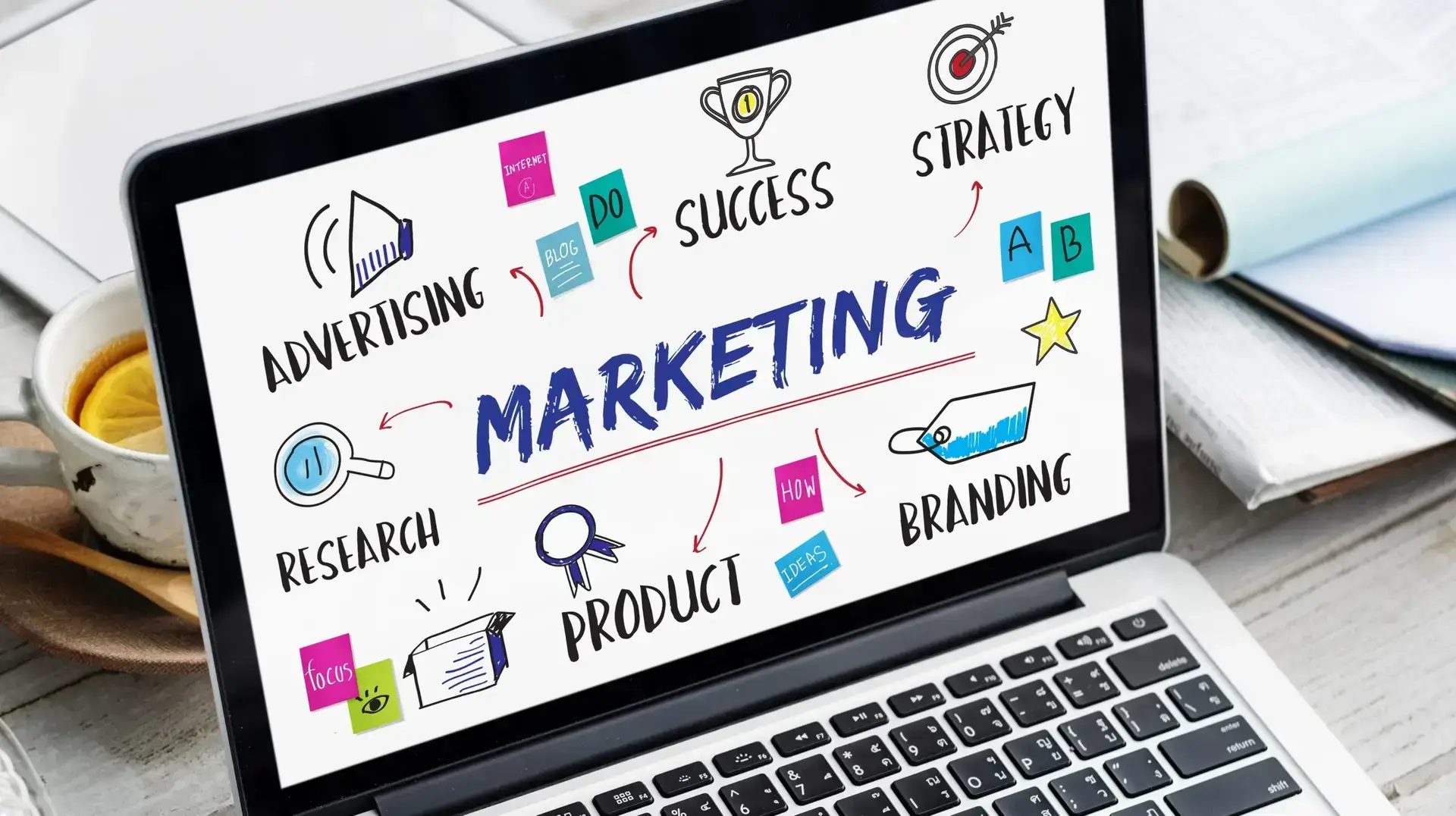

Creating an amazing online course is only half the battle. In the crowded digital landscape of 2025, knowing how to market your course effectively is the key to turning your expertise into a thriving business.
The passion, late nights, and meticulous effort poured into curriculum design, video production, and workbook creation are foundational, but they don’t guarantee a single student. This is the great paradox for educators and experts: mastery of a subject rarely translates to mastery of marketing.
The unfortunate reality is that the internet is filled with brilliant, transformative courses that remain hidden, failing to make the impact or income they deserve, simply because their creators believed their job was done once the final module was uploaded.
This creator-first mindset, while pure in its intention, is a recipe for commercial failure in a market that has matured well beyond its early “gold rush” days.
If you’re feeling overwhelmed by endless marketing options, it’s time to focus on a proven framework for success. The modern digital marketing world is a cacophony of “get rich quick” tactics and ever-changing social media algorithms.
You’re told you need to be on TikTok, run Facebook ads, start a podcast, write a blog, master SEO, and build a community, all at once.
This leads to what’s known as “shiny object syndrome,” where course creators jump from one tactic to another without a coherent strategy, burning through their time, money, and motivation with little to show for it.
The antidote to this chaos isn’t to do more, but to do what matters with more focus. It’s about building a solid foundation and a reliable system, not just throwing spaghetti at the wall to see what sticks.
The feeling of burnout and the anxiety of checking your sales dashboard only to see a flat line are symptoms of a broken or non-existent strategy.

The Foundation: A Deep Understanding of Your Ideal Student
The foundation of any great marketing strategy is a deep understanding of your ideal student.
Before you spend a dollar on ads or an hour on content, you must define exactly who you are serving. This is, without question, the most critical and most frequently skipped step in the entire marketing process.
Attempting to market your course without a crystal-clear picture of your Ideal Student Avatar (ISA) is like an architect trying to design a house without knowing who will live there.
Every piece of marketing you create—from an ad’s headline to an email’s subject line to your sales page copy—will be generic, weak, and ineffective.
You cannot resonate with everyone, but you can become an undeniable, must-have solution for a specific person with a specific problem.
To build this foundation, you must go far beyond basic demographics. Answering the core questions is the first layer. Who are they, what are their biggest pain points, and where do they spend their time online?
Step 1: Who Are They? (The Demographics & Psychographics)
Start by creating a detailed profile. Give your avatar a name. Are you serving “Stuck Sarah” or “Ambitious Alex”? This simple act of humanization is surprisingly powerful.
- Demographics: What is their age, gender, location, occupation, and income level? Are they married? Do they have kids? This basic information helps shape the tone, context, and specific examples in your messaging.
- Psychographics: This is where the real connection is forged. What are their deep-seated values, beliefs, and aspirations? What are their secret fears and insecurities? What does success look like in their eyes.
For example, a student wanting to learn project management might demographically be a “35-year-old marketing manager.”
Still, psychographically, they are driven by a deep fear of looking incompetent in front of their new boss and aspire to feel confident and in control of their work. Your marketing should talk more about earning the respect of their team.
Step 2: What Are Their Biggest Pain Points? (The Problem You Solve)
Students don’t buy courses; they buy transformations. They are purchasing a bridge away from a place of pain and toward a desired future state. Your job is to understand that pain better than they do and articulate it with profound empathy.
- External Problems: These are the tangible, surface-level issues. “I don’t know how to use Adobe Premiere Pro,” “I can’t get any freelance clients,” or “My website isn’t converting.” These are the logical problems.
- Internal Problems: These are the emotional frustrations caused by the external problems. “I feel like a creative imposter,” “I’m terrified of failing and wasting my family’s money,” or “I feel completely overwhelmed and stuck.” These are the emotional drivers.
- Philosophical Problems: This is a deeper level. It relates to a larger “why.” For instance, “Good design shouldn’t be so hard to learn” or “Small business owners deserve the same marketing advantages as big corporations.” Tapping into a philosophical problem aligns your brand with their worldview.
Your marketing must speak directly to all three layers. Acknowledge the external frustration, validate the internal feeling, and align with their philosophical belief. When a potential student feels truly “seen” by your marketing, trust begins to form instantly.
Step 3: Where Do They Spend Their Time Online? (The ‘Watering Holes’)
Once you know who they are and what they struggle with, you need to find out where they gather online.
This is the key to efficient and cost-effective targeting. Instead of shouting into the void, you can join the conversations they’re already having. To find these digital watering holes, conduct active research:
- Community Mining: Go to Reddit, Facebook Groups, or niche forums related to your topic. Search for phrases like “I’m struggling with,” “How do I,” or “I’m so frustrated by.” The exact language people use to describe their problems is pure gold for your ad copy and sales page.
- Competitor Analysis: Look at the followers of major influencers or competitors in your space. Who are they? What questions are they asking in the comments section? This is free market research.
- Review Intelligence: Go to the Amazon pages for the top 3-5 books in your niche. Read the 3-star reviews. These are often the most insightful, detailing what the book didn’t solve for them—a gap your course can potentially fill.
Answering these questions allows you to craft messaging that resonates deeply and attracts qualified leads who are eager to learn from you. Your content stops being an interruption and starts being a welcome discovery. You show up in their favorite places with a message that sounds like you’re reading their mind, creating an immediate and powerful connection.
The System: Building Your Automated Sales Funnel
Next, you need a system to turn those leads into students. This is your sales funnel. A funnel isn’t a sleazy marketing trick; it’s a carefully designed customer journey that guides a potential student from initial awareness to confident enrollment.
It’s the essential bridge between your expertise and their transformation. It replaces the need for you to manually hustle for every single sale, allowing you to create a predictable and scalable business.
A well-designed funnel guides potential students on a journey, starting with a valuable free resource (a lead magnet), building trust through an automated email sequence, and leading them to a compelling sales page that converts.
Step 1: The Lead Magnet (The Ethical Bribe)
You cannot ask a stranger for a sale; you must first earn their trust. The journey begins with a “lead magnet,” a high-value piece of content you offer for free in exchange for their email address.
This isn’t just any freebie; it must be a hyper-specific solution to a small piece of the larger problem your course solves. A great lead magnet gives them a “quick win,” demonstrating your expertise and building immediate goodwill. It must pass the “Litmus Test”:
- Ultra-Specific: It solves one problem, not ten. “A 5-Step Checklist to Write a High-Converting Email Subject Line” is better than “An Ebook on Email Marketing.”
- Instant Gratification: The value should be obtainable in 5-10 minutes. Checklists, templates, and short video trainings work better than long ebooks or multi-day challenges for initial lead capture.
- Demonstrates Expertise: It should subtly showcase your unique approach and hint at the deeper knowledge contained within your course, creating a natural desire for the next step.
Step 2: The Nurture Sequence (The Relationship Builder)
Once someone has downloaded your lead magnet, they enter your automated email sequence. This is where the magic happens.
Over a series of 5-10 pre-written emails, delivered automatically, you can nurture that new lead from curiosity to commitment, building a powerful bond along the way. The psychology is key:
- Email 1: Deliver & Delight. Immediately send the promised lead magnet. The goal is to be helpful and set a positive tone. You can also open a small “curiosity loop” by telling them what to expect in the next email.
- Email 2: The Empathy Bridge. Tell a relatable story about your own struggles or a client’s struggle with the same problem they face. Use the “Problem-Agitate-Solve” framework within this single story. This shows you understand them on an emotional level.
- Email 3: The Epiphany. This is your authority-building email. Share a paradigm shift or a counterintuitive insight that re-frames how they see their problem. This creates an “aha!” moment and positions you not just as a teacher, but as a true guide.
- Email 4: The Social Proof. Share a compelling case study or a few powerful testimonials. People are looking for proof that your method works for people like them. This email is all about risk reversal and making the transformation feel achievable.
- Emails 5 & Beyond: The Transition to Sale. Now that you’ve delivered value, shown empathy, established authority, and provided proof, you have earned the right to make an offer.
Clearly and confidently introduce your course as the structured, A-to-Z solution to their problem. Handle common objections and use clear calls to action.
Step 3: The Sales Page (The Conversion Tool)
The sales page is the final destination in your funnel where the conversion happens. This page is a direct conversation with your Ideal Student Avatar. Every element must be meticulously crafted:
- The Headline: Must grab them by speaking directly to their primary desire or pain point.
- The Story: Weave a compelling narrative that takes them from their current frustrating reality to their desired future.
- The Solution: Clearly introduce your course as the vehicle for this transformation.
- The Proof: Sprinkle your best testimonials, case studies, and data points throughout the page.
- The Offer: Clearly break down exactly what they get—modules, bonuses, community access.
- The Guarantee: Remove all risk with a strong money-back guarantee.
- The FAQ: Proactively answer every question and objection you can think of.
This automated system works for you 24/7, creating consistent and predictable revenue. While you are sleeping, on vacation, or developing your next course, your funnel is constantly working in the background – attracting new leads, building relationships, and converting students.
This is how you break free from the “launch and crash” cycle and build a truly sustainable online education business.

From Principles to Profit
While these principles are simple, executing them can be complex. Course creators often waste thousands on ads that don’t work and get lost in complicated tech.
The path is littered with common but costly mistakes: running ads to the wrong audience, writing emails that don’t get opened, building landing pages that don’t convert, or getting paralyzed by the technical details of setting up the automation.
This is the gap between knowing what to do and knowing how to do it efficiently and effectively. Every dollar spent on an untargeted ad and every hour spent on a flawed strategy is a drain on your resources and a delay in your impact.
The cost is not just financial; it’s emotional, leading to self-doubt and the temptation to quit.
If you’re ready to stop guessing and implement a proven system for attracting a steady stream of buyers, the IPM Blueprint is your next step.
It’s designed to bridge that gap between knowledge and execution, providing a clear, logical path through the complexities of digital marketing.
Our Info Product Marketing Blueprint provides the exact step-by-step process for building a profitable marketing system that automatically turns strangers into students.