
In this Vavoza Insider article, we’ll break down why livestreaming is making a serious comeback in 2026, particularly in the info marketing space.
We’ll also discuss how you can use it to build deeper trust with your audience and sell more courses, coaching, and memberships.
This isn’t another article about “going live on Instagram.” This is about a fundamental shift in how creators are building influence and converting audiences in 2026.
The MrBeast Stadium Experiment
Alex Hormozi recently shared a story from a private conversation he had with MrBeast.
MrBeast attended a major soccer match where the organizers introduced different tiers of creators and celebrities to the crowd. The audience’s reaction told a very interesting story:
- A-list celebrities from traditional media received almost no applause. Polished, scripted, heavily edited content creates distance between the creator and the audience.
- Short-form creators from TikTok and Instagram got slight applause. Entertaining? Yes, but forgettable.
- Long-form creators like YouTubers and podcasters received legitimate, enthusiastic applause. The crowd was noticeably energized.
- Live streamers triggered the most dramatic response. The entire stadium erupted!
This isn’t surprising when you look at the numbers. Kai Cenat, the most-followed streamer on Twitch with 20 million followers, broke Twitch’s all-time subscription record in 2025, with 1.1 million active subscribers during his Mafiathon 3 event.
That single subathon generated 85 million hours watched and an estimated $3.2 million in revenue.
IShowSpeed won Streamer of the Year at the 2025 Streamer Awards and routinely draws stadium-sized crowds during his real-life streams across Europe, Africa, and South America.
These aren’t gamers sitting in dark rooms. These are cultural figures with more real-world influence than most Hollywood actors.
And the reason is simple: they show up live, unscripted, and raw. Their audiences feel like they know them.
This tracks with what we’re seeing across the info product space right now.

Why Live Sells Better Than Pre-Recorded
Here’s the thing most course creators and coaches don’t realize: your audience doesn’t need more content.
They need more of you.
There’s a reason Hormozi shifted his entire 2026 content strategy toward live streaming after that conversation with MrBeast. He now does 1+ hour live sessions regularly.
His reasoning is simple, and we agree with it:
Live streaming is the closest digital equivalent to spending time with someone in person.
Think about it. When you go live, there’s no editing. No retakes. No carefully crafted scripts. Your audience sees you think in real time, answer questions on the spot, and react to things genuinely.
That builds trust faster than any pre-recorded video ever could.
And trust is the single most important factor in selling info products. People don’t buy courses from strangers. They buy from people they trust. Period.
Here’s What The Data Says
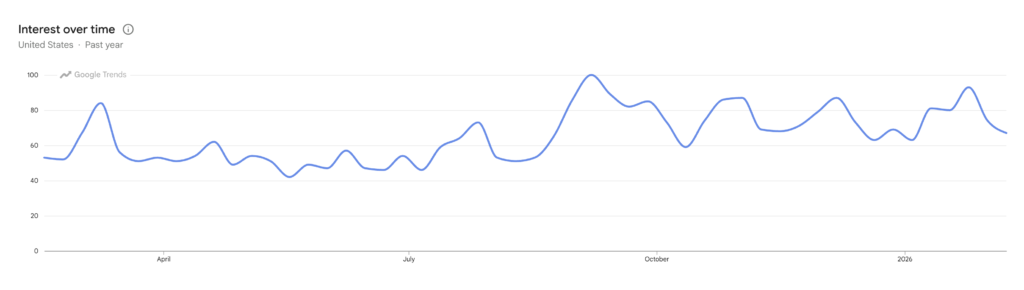
– According to WordStream’s 2026 Video Marketing Trends report, when users are looking for more opportunities for engagement with real people and more opportunities to confirm authenticity, live video sessions are going to be more popular than ever.
– EY’s 2026 Media & Entertainment report highlights that companies are launching live experiences and embracing creator-led ecosystems as a defining trend this year.
– According to DemandSage’s 2026 Live Streaming Statistics, live video is reshaping digital content consumption across marketing, business communication, and social media engagement.
– And according to Zebracat, Shorts that hold attention past the first 5 seconds have a 60% lower swiped-away rate. But live streams bypass this problem entirely because the audience is choosing to be there in real time.
The trend is undeniable. But data aside, let us share something more practical.
Who’s Going Live in 2026
This isn’t just theory. Some of the biggest names in the creator and info product space are already leaning heavily into live sessions in 2026:
- Alex Hormozi pivoted his content strategy after MrBeast’s insight. He released a video in October 2025 titled My Actual Social Media Strategy For 2026, where he broke down the shift.
He now regularly hosts 1+ hour live streams packed with tactical business advice.
He measures success not by views but by whether respected business owners text him afterward saying, “Yo, that was fire.” His framework: live content builds Status, Power, Credibility, and Likeness (SPCL) faster than any other format.
His book launch for $100M Money Models included a massive livestream event that contributed to what was reported as an $81 million single-day launch. - GaryVee is running 8 live coaching sessions as part of his GaryVee x Stan Challenge, complete with Q&A and weekly growth check-ins.
He’s not just talking about life. He’s structuring his entire 2026 creator monetization program around it. According to Entrepreneur, creators on the Stan platform have already generated over $400 million.
Gary’s bet: the future of info product sales is live interaction, not static landing pages. - Ryan Serhant, the real estate mogul featured on the Iced Coffee Hour podcast, has been vocal about the power of live presence and real-time audience engagement as a business-building tool.
His approach: if you can sell a $160 million apartment by showing up and being real, you can sell a $997 course the same way. - Dan Koe wrote a piece called How Smart Creators Will Make Money in 2026, in which he outlined that the winning monetization models are coaching, communities, cohorts, and live memberships.
Not pre-recorded courses sitting on a shelf. Live, interactive experiences where the creator shows up and delivers in real time. - Kai Cenat and IShowSpeed are proof-of-concept on the entertainment side. Kai’s Mafiathon 3 pulled 85 million hours watched, featured LeBron James, and made him the first American Twitch streamer to hit those numbers.
IShowSpeed’s real-life streams across 30+ countries draw tens of thousands of fans in person. WWE’s Royal Rumble 2025 saw a 240% increase in peak viewership specifically because Kai Cenat and IShowSpeed co-streamed the event.
The pattern is clear. From business to entertainment, the creators who are winning in 2026 aren’t just posting content. They’re showing up live.
From Social Media to Interest Media
Hormozi calls the current shift a transition from “social media” to “interest media.”
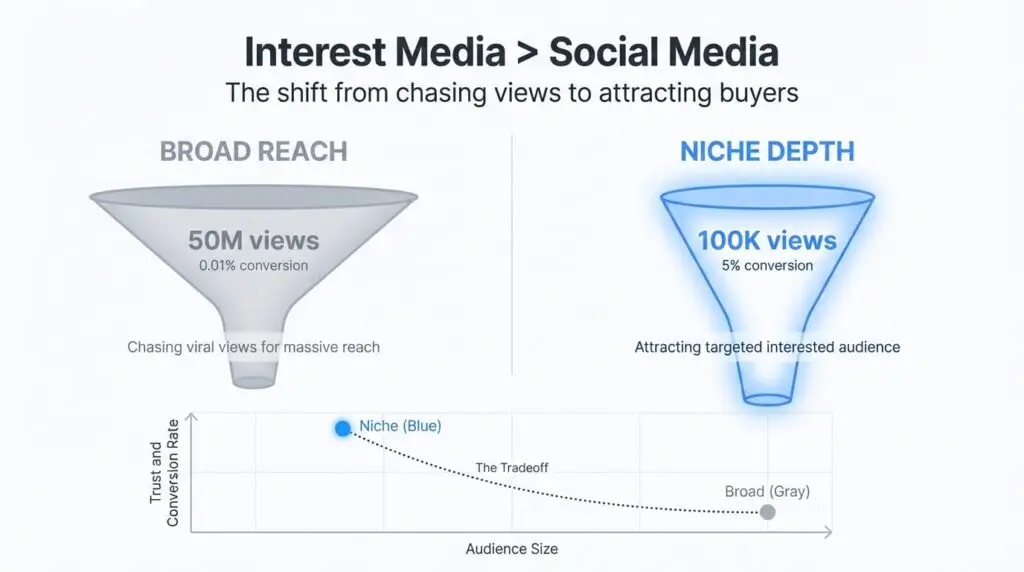
Here’s what he means: chasing viral views is a losing strategy. If a video of someone’s grandmother slapping Hormozi gets 50 million views, those numbers mean absolutely nothing for his business. That content attracts people interested in humor, not people interested in building companies.
Modern algorithms are sophisticated enough to function as the ultimate targeting tool. They understand content topics, evaluate creator backgrounds, and match videos with users who have demonstrated engagement with specific subjects.
In the “interest media era,” the content itself becomes the targeting mechanism.
This is massive for info product sellers. You don’t need millions of views. You need the right views.
Hormozi uses U.S. Census data to illustrate this: only 9% of Americans own a business, about 33 million people. Within that group of entrepreneurs, only 5% generate over $1 million annually – that’s only 1.5 million people.
100,000 views from million-dollar business owners is infinitely more valuable than 50 million views from random people who will never buy anything from you.
And here’s the kicker: live streams naturally attract higher-intent viewers. Nobody accidentally stumbles into and watches a 60-minute live session. The people who show up are genuinely interested in what you have to say.
That’s your buyer.
5 Steps to Start Going Live
Alright, enough analysis. Let’s get into the actionable part. Here’s how you can start using livestreams to sell more courses, coaching, and memberships in 2026.
1. Pick One Platform
Don’t try to go live on YouTube, Instagram, TikTok, and Facebook simultaneously. Pick the platform where your audience already lives
YouTube Live is ideal if you sell courses or coaching programs, because YouTube’s algorithm favors long-form, educational content. Your live session can also be saved and recommended as a regular video afterward, giving you double the value from one piece of content.
Instagram Live works well for community-based offers like memberships, because the notification system and the casual format encourage participation from existing followers.
Facebook Live is still strong for audiences in the 35-55 age demographic, particularly in the health, wellness, and business opportunity niches
Start with one. Get consistent. Expand later.
2. Short and Frequent Beats Long and Rare
One of the biggest mistakes is creators thinking they need to host a 2-hour marathon session once a month.
Wrong approach.
Instead, go live for 5-30 minutes, 2-3 times per week. Keep it conversational. Answer questions. Share quick tips. React to industry news.
The goal is frequency and consistency, not production value. Your audience wants to see you regularly, not once in a blue moon with a fancy setup.
Think of it like a radio show, not a movie premiere.
3. Lead With Value, Close With an Offer
Structure your live sessions like this:
- First 80%: Pure value. Answer questions. Teach something specific. Share a quick case study or win from your students/clients.
- Last 20%: Transition naturally into your offer. “If you found this helpful, I go way deeper inside my exclusive training; here’s the link.”
Never lead with the pitch. Always lead with value. The people who show up live are there to learn. Respect that, and the sales will follow.
This approach is consistent with what we’ve always taught at Vavoza: lead with value, and the conversions will come.
4. Repurpose Every Session
Every live session is a content goldmine. After you go live:
- Save the full replay as a YouTube video or podcast episode.
- Cut 3-5 short clips for TikTok, Reels, and Shorts.
- Pull quotes for social media posts and email content.
- Use the Q&A as inspiration for your next blog article or email sequence.
One 20-minute live session can produce a week’s worth of content across every platform. That’s efficiency.
5. Recurring Schedule
The creators who succeed with live aren’t the ones who go live “whenever they feel like it.” They have a schedule, and their audience knows when to show up.
Pick a day and time. Announce it. Stick to it.
For example: “Every Tuesday at 12 PM EST, I go live and answer your questions about scaling your course business.”
Within a few weeks, your audience will start building a habit around your live sessions. And that habit becomes a powerful conversion tool.
Closing Remarks
Livestreaming in 2026 is not what it was in 2020. It’s not about gaming or casual entertainment anymore.
It’s about building real trust, attracting high-intent audiences, and creating the kind of deep connection that actually converts into sales.
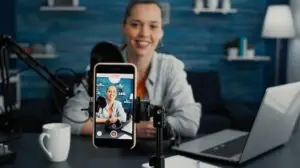
The biggest names in the space (Hormozi, GaryVee, Serhant, Dan Koe) are already doing it. The data supports it. And the barrier to entry is practically zero: all you need is a phone, an internet connection, and something valuable to say.
If you sell courses, coaching, memberships, or any form of info product, this is your opportunity to get ahead of the curve.
Start going live. Start this week. Keep it simple. Overdeliver with value. And watch what happens to your audience’s trust and your sales.
The creators who build the deepest connections will win in 2026. And no format builds a connection faster than live.
Would you like to keep up with the latest digital marketing trends and tech news daily with unmatched speed and conciseness? Subscribe to Vavoza Insider 🗞️