

Most course creators and coaches are fighting for seconds of attention on TikTok and Instagram.
Meanwhile, Pinterest just reported 619 million monthly active users in Q4 2025, with purchase intent baked into almost every search.
The platform works more like a search engine than a social feed, and 96% of its top searches are unbranded.
For anyone selling courses, coaching programs, or digital products, that is a massive discovery opportunity that almost nobody in this space is taking seriously.
This article breaks down why Pinterest is unique, who is already winning on the platform, and how to build a Pinterest strategy that drives real sales for your course or coaching business.
Why Pinterest Is Different From Every Other Platform
Pinterest is not a social media platform in the way most people think about social media. Users do not open Pinterest to scroll through friends’ updates or watch random videos.
They open Pinterest to search for something specific: a solution, an idea, a product, a plan. That behavioral difference changes everything for course creators and coaches.
On Instagram and TikTok, content is entertainment-first. Users scroll passively, and the algorithm rewards virality over intent.
On Pinterest, users search for topics like “how to start a coaching business” or “best online course platforms.” These searches signal active purchase intent, not passive curiosity.
The content lifespan comparison makes this even more compelling.
An Instagram post peaks within 21 to 48 hours and then disappears into the feed. A TikTok video might get a second wave, but most content dies within days.
Pinterest pins drive traffic for an average of 3.76 months after publishing, often up to 6-12 months, compared to roughly 24 hours for a LinkedIn post and approximately 10 days for a YouTube video.
Some high-performing pins keep generating clicks for years. Every pin published is a long-term asset, not disposable content.
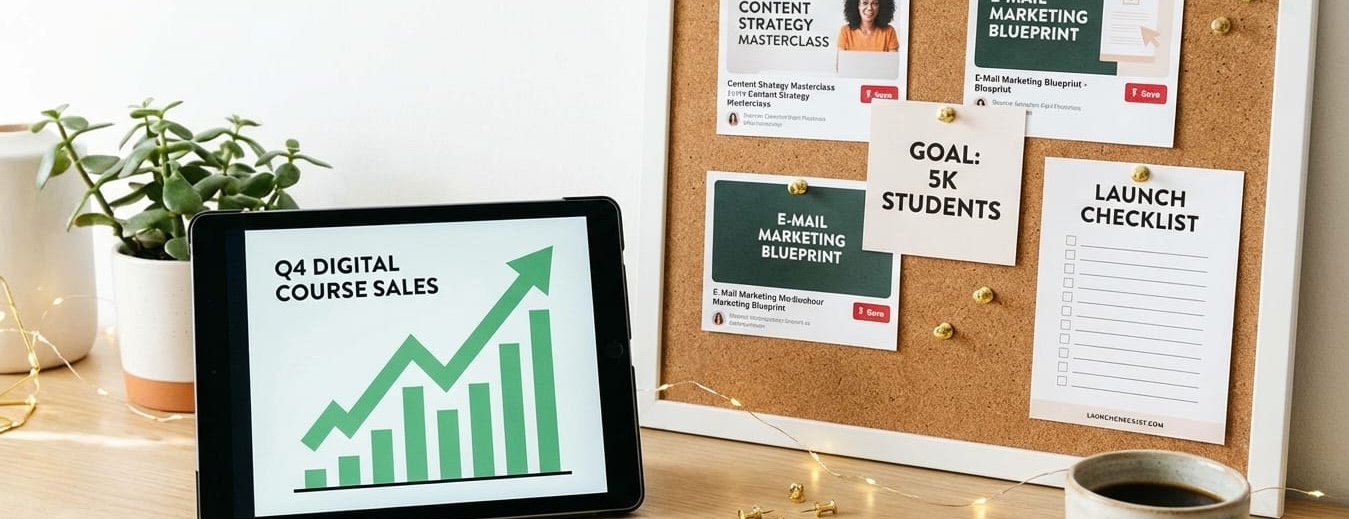
The Numbers You Need To Know
The data behind Pinterest in 2026 tells a clear story for info product marketers.
Pinterest hit a record 619 million global monthly active users in Q4 2025, marking 10 consecutive quarters of year-over-year user growth of 12% or more.
Gen Z is now the fastest-growing segment on the platform.
83% of weekly Pinners have made a purchase based on content they saw from brands on Pinterest.
According to Pinterest, active users convert from discovery to purchase at rates well above scroll-based platforms.
The best part? 96% of top searches are unbranded.
Sprout Social’s 2025 Pinterest statistics report confirms that nearly all Pinterest searches skip brand names entirely. Users search for topics, not companies.
That means a small course creator competes on equal footing with established brands.
Outbound clicks to advertisers rose 40% in Q3 2025. Pinterest’s AI-driven improvements tightened the connection between product discovery and actual commerce, creating a stronger pipeline from pin to purchase.
Performance+ campaigns outperformed traditional campaigns by nearly 80%.
Pinterest’s data on their AI-powered ad suite shows massive efficiency gains for advertisers willing to use the new tools, including automated ROAS bidding and AI image improvements.
Who Is Already Winning On Pinterest
A handful of course creators and coaches figured out Pinterest early. Their results show what the platform can do when the strategy is intentional.
- Jenna Kutcher built Pinterest into one of her top organic traffic drivers, using it to funnel visitors to her website, course pages, and podcast episodes.
Her Pinterest Lab program has helped over 27,000 creatives, coaches, and course creators put a Pinterest strategy in place.
One of her students reported growing from 300 to over 30,000 monthly Pinterest views after applying the system.
The key: treating every blog post and podcast episode as a pinnable asset with keyword-rich graphics. - Carly Campbell turned Pinterest into a traffic engine for her blogging and course business.
Her Pinteresting Strategies course teaches the exact pinning system she used to drive tens of thousands of monthly visitors to her site.
Her success proves that Pinterest rewards consistency and keyword targeting over follower count. - Heather Farris runs a Pinterest management and consulting business built entirely on Pinterest expertise.
She regularly publishes Pinterest strategy content aligned with Pinterest Predicts reports and teaches course creators how to build keyword clusters around trending topics.
Her approach shows that niche positioning on Pinterest compounds over time as older pins keep surfacing in search results. None of these creators went viral overnight.
These info product sellers built distinct systems that generate traffic and convert course buyers.

How Pinterest Works For Digital Products
The mechanics of Pinterest favor digital product sellers in ways that other platforms simply do not.
Pinterest is a visual search engine. When someone searches “how to grow an email list,” Pinterest returns pins – visual bookmarks – that link directly to external websites.
Unlike Instagram, which traps traffic inside the app, Pinterest actively sends users to landing pages, blog posts, and sales pages.
Every pin is a clickable doorway to a course sales page, a lead magnet, or an opt-in page.
The board structure works like a content library organized by topic.
A business coach might have boards titled “Email Marketing Tips,” “Ad Campaign Launch Strategy,” and “Business Growth.”
Each board targets a different keyword cluster that potential buyers are actively searching. Over time, these boards become searchable hubs that surface across thousands of related queries.
The compounding effect is the real advantage.
A course creator who publishes 5 pins per week for 6 months builds a library of 130+ searchable assets. Each pin keeps working long after publication.
Compare that to Instagram, where 130 posts over 6 months means 130 pieces of content that peaked within 48 hours.
Pinterest rewards volume over time because the algorithm treats content as a long-term catalog rather than a real-time feed.
This catalog effect is what makes Pinterest uniquely valuable for info products: every pin is a permanent storefront for a course, a coaching offer, or a lead magnet that never expires.
If you already use content formats like street interviews and EGC-style videos on short-form platforms, you can repurpose screenshots, quotes, and key takeaways from that content directly into Pinterest pins.
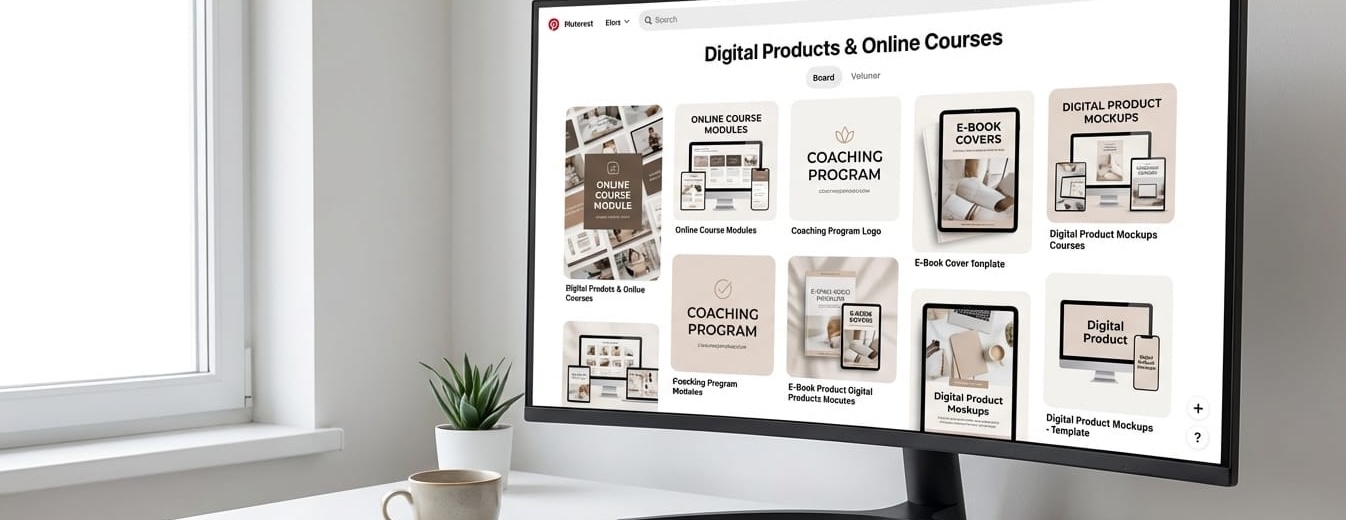
How To Build A Pinterest Strategy For Your Course Or Coaching Business
Building a Pinterest strategy for courses and info products does not require a massive following or ad budget. Here’s how to get started today:
Step 1: Set Up A Pinterest Business Account
A business account unlocks Pinterest Analytics, rich pins, and the ads platform.
Claim the website associated with the course or coaching business so that all pins linking to that domain are correctly attributed.
Enable rich pins, which automatically pull metadata from the website into pin descriptions. This step takes 10 minutes but is essential for tracking what actually drives clicks and conversions.
Step 2: Define Your Boards Around Purchase-Intent Keywords
Create 8-12 boards named after keyword phrases that potential students and clients actually search. Skip generic names like “Marketing Tips.”
Use specific phrases like “How To Launch an Online Course” or “Email List Building for Coaches.”
Research keywords using Pinterest’s built-in search bar – the autocomplete suggestions reveal real user searches, and the Pinterest Trends tool.
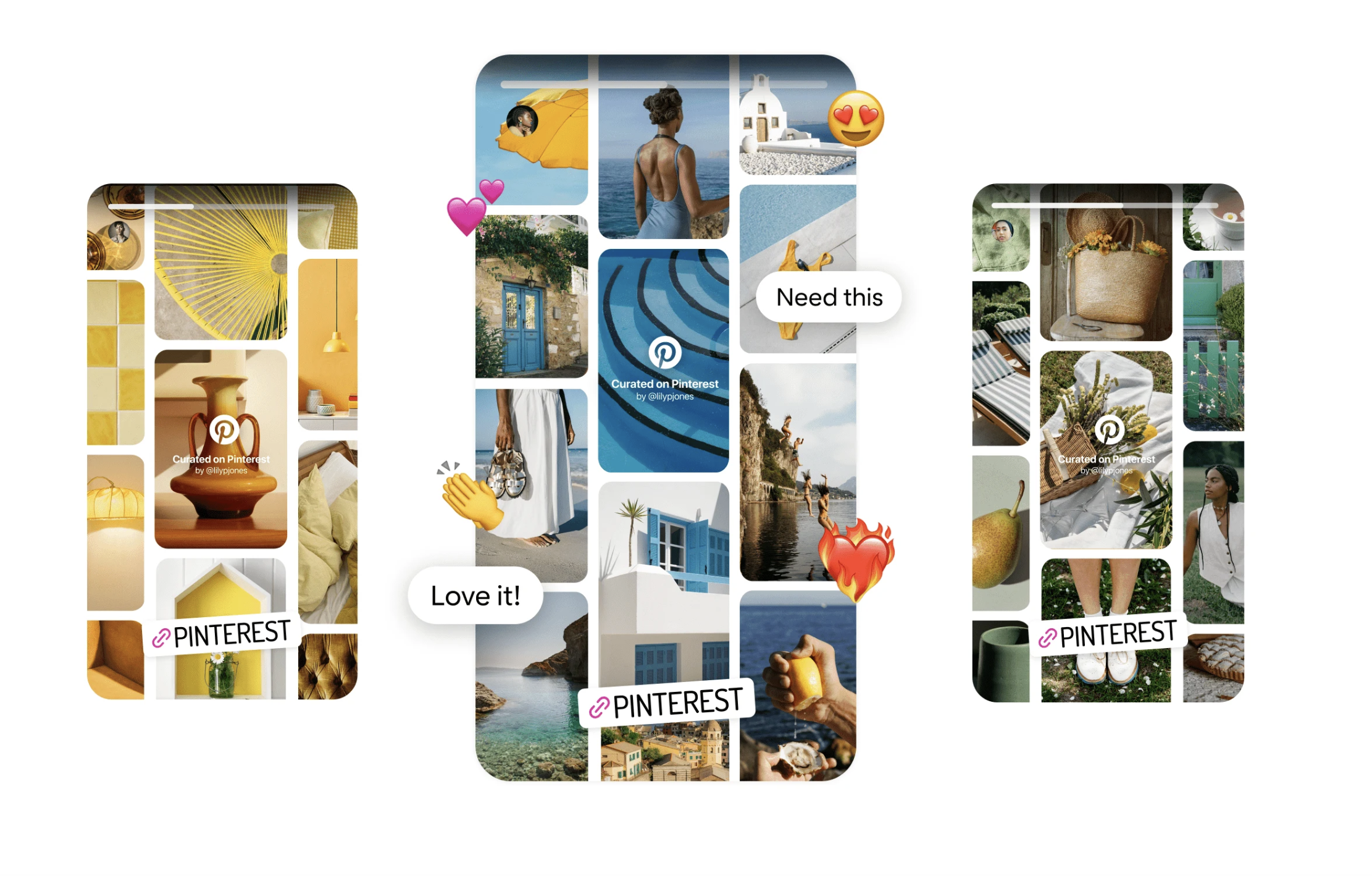
Image Credit: Pinterest
Step 3: Create Pins That Drive Traffic, Not Just Saves
Design vertical pins (1000×1500 pixels) with bold text overlays that communicate a clear benefit.
“5 Steps to Fill Your Coaching Program with High-Paying Clients” performs better than a pretty graphic with no context.
Every pin should link directly to a relevant landing page, blog post, or lead magnet. Prioritize click-through value over aesthetic perfection.
Step 4: Write pin descriptions for Pinterest SEO
Write keyword-rich pin titles and descriptions. Include the target keyword in the first line of the description.
Sprout Social recommends using relevant terms naturally across pin titles, descriptions, and board names. Add alt text to every pin image.
Pinterest’s algorithm reads all of this text when deciding which searches to surface a pin for.
Step 5: Build A Consistent Pinning Schedule
Aim for 5-15 fresh pins per week. Consistency matters more than volume.
Use a scheduling tool like Tailwind to batch-create and auto-publish pins. Repurpose existing content by creating multiple pin designs for the same blog post or landing page.
One piece of content can generate 5-10 unique pins, each targeting a slightly different keyword angle.
Step 6: Use Pinterest Ads To Amplify What Is Already Working
Once organic pins start gaining traction, use Pinterest’s Performance+ ad campaigns to amplify top performers.
The AI-powered system handles bidding, audience targeting, and creative improvements automatically. In A/B testing, Performance+ campaigns outperformed traditional campaigns by nearly 80%.
Start with a small daily budget ($10-20) to promote pins with organic engagement.
Pinterest ads benefit from lower CPCs than most social platforms because competition among info product sellers is still minimal on the platform.
The ROAS bidding feature means the algorithm works toward actual revenue rather than just clicks.

Closing Remarks
The window for course creators and coaches on Pinterest is wide open right now.
The platform has users, purchase intent, and ad tools to drive real sales – but the info product space hasn’t caught up yet.
Your competitors are still pouring all their energy into TikTok and Instagram, fighting for attention that lasts hours.
Building a Pinterest presence today means stacking an asset that keeps working for months and years.
Would you like to keep up with the latest digital marketing trends and tech news daily with unmatched speed and conciseness? Subscribe to Vavoza Insider 🗞️