
Street interview content has become one of the fastest-growing formats on TikTok, Instagram, and YouTube.
NBC News covered the trend in 2025, calling it a defining social media movement – and it is still rapidly gaining traction today.
For coaches, course creators, and info marketers, this format offers something no scripted testimonial can match: real people reacting to real offers in real time.
This article breaks down why street interviews work, who is doing them right, and how to use this format to validate offers, build social proof, and grow an audience.
What Is Street Interview Content?
Street interview content is exactly what it sounds like:
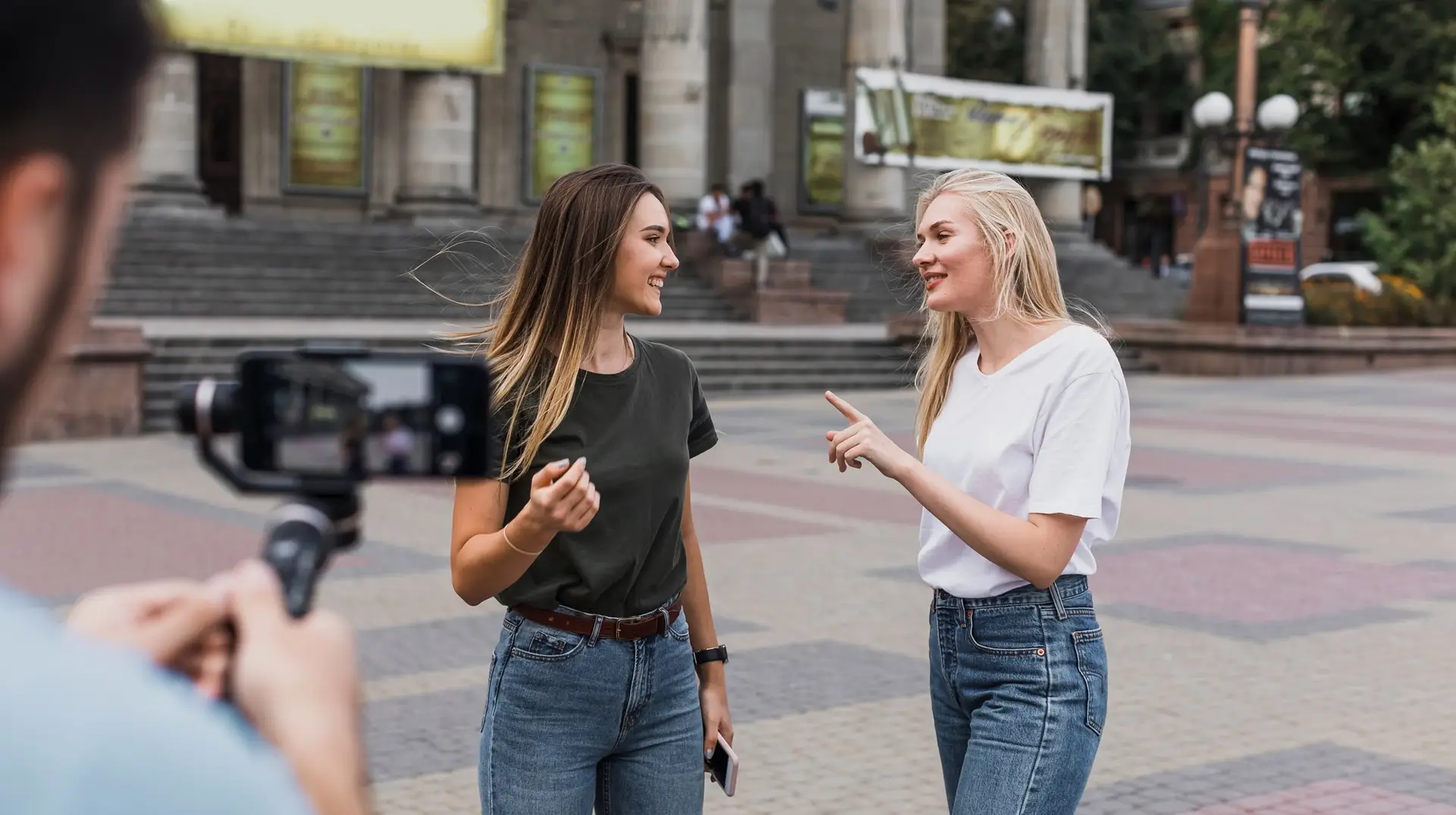
A creator or brand representative stops people in public, asks them a question on camera, and captures their unfiltered reaction.
The clip gets edited into a short-form video (usually under 90 seconds) and posted to TikTok, Instagram Reels, or YouTube Shorts.
There are two main approaches:
- The first is fully spontaneous: walk up to a stranger, ask the question, and film whatever happens.
- The second is semi-staged: bring in willing participants who agree to be filmed while still giving genuine, unscripted reactions.
Both approaches work because the value comes from the authenticity of the response, not the setup.
For info product sellers, this looks like walking up to entrepreneurs and asking whether a coaching offer sounds worth the price based on the value stack.
Or stopping small business owners on the street and asking what they would pay for a specific result.
The raw, uncoached answers can carry more weight than written testimonials.

Why Street Interviews Go Viral
Strangers have zero reason to lie. They are not being paid. They have no affiliate link.
They have nothing to gain by saying something positive. That arguably makes their reactions more believable than curated reviews or polished case studies.
When a random person on the street says, “That sounds like a great deal,” the audience trusts it because the context removes any motive to deceive.
The psychology behind this is well-documented.
Street interviews compress the entire decision-making process into a 60-second video.
There is also a curiosity factor. Viewers scroll past polished ads, but they stop for unscripted human interaction.
The unpredictability of a stranger’s answer creates a pattern interrupt, keeping watch time high. And high watch time is what algorithms on all social media platforms reward.
Here’s The Supporting Data
The data backs up why this format is gaining momentum across platforms:
According to Sprout Social, more than 60% of product discovery now occurs on platforms like TikTok, Instagram, and YouTube, with users actively seeking authentic, human content over polished brand ads.
Short-form video delivers one of the highest ROI of any content format, and live-streaming video is up there in the ranks.
91% of businesses now use video as a marketing tool, and 85% of consumers say video has directly helped them make a buying decision, according to Wyzowl via Sprout Social.
The global livestreaming market was valued at $87.55 billion in 2023 and is projected to reach $345 billion by 2030, growing at a compound annual rate of 23%.
These numbers point to the same conclusion: audiences want real human content, they want it on video, and they want it on social platforms. Street interviews check every one of those boxes.

Who’s Doing Stree Interviews Right Now
Several creators have turned street interview content into a massive audience. Here is who is leading the format and what the numbers look like:
- Julian Shapiro-Barnum built one of the most recognizable street interview brands on the internet.
The show features rapid-fire interviews with kids in New York City and has grown to 2.8 million TikTok followers with 192.8 million likes.
One clip, “It’s Corn,” went so viral that it became a chart-topping song. - Dose of Society was founded by Nii Lartey and Ahmed Faid in 2017. Their street interview clips capture real stories from real people, and the channel has grown to 6 million followers across platforms with over 1 billion cumulative views.
They now have a team of 13 employees and partnerships with Facebook, Instagram, and Snapchat. - What’s Poppin? with Davis (Davis Burleson) launched from Washington Square Park in New York, featuring rapid-fire interviews with strangers. The show has grown to 2.1 million followers on TikTok with 229.8 million likes.
The New York Times and Interview Magazine both profiled the format. - Chris Stocks took street interviews in a different direction by mixing product challenges and financial questions with on-the-spot reactions.
His TikTok channel has reached 1.7 million followers by stopping strangers in San Diego and asking about money, fitness, and lifestyle products.
The format works across niches. These creators proved it scales with entertainment, but the same mechanics translate directly to marketing.
Replace “what’s your best advice?” with “would you buy this coaching offer at this price?” and the engagement patterns stay identical.
Street Interviews + Livestreaming: The Power Combo
Going live with street interviews takes the format to another level. Pre-recorded street interviews already outperform most content types because of their raw energy.
Livestreaming that same format removes the last layer of doubt: the audience knows nothing is being edited out.
Platforms are pushing live content harder than ever.
26.8% of global internet users watch live streams every week, and HubSpot’s 2026 State of Marketing Report ranks live-streaming as the third-highest ROI format, right behind short-form and long-form video.
TikTok, Instagram, and YouTube all prioritize live broadcasts in their algorithms, giving them higher visibility with less reliance on followers.
For a deeper breakdown of why livestreaming is surging again and how to leverage it to grow your brand, check out our article: Why Livestreaming Is Making a Comeback in 2026.
The setup is straightforward: Grab a phone, a stabilizer or tripod, and a simple clip-on microphone, go to a high-traffic area, and start a live stream on TikTok or Instagram.
Walk up to people and ask a single focused question about your offer, niche, or product category.
The live chat will explode with reactions. Clip the best moments afterward and repurpose them as short-form content throughout the week.

Your Next Steps: How To Create Street Interview Content
Here is a step-by-step breakdown for creating street interview content that drives real results:
Step 1: Define Your Interview Question
Pick one clear, specific question. Vague questions produce vague answers.
Strong questions produce quotable clips. For a course creator, something like “Would you pay $997 for a coaching program that teaches you to land 10 clients in 30 days?” gets a direct reaction that either validates or challenges the offer.
Step 2: Choose Real or Staged Participants
Both work. Spontaneous street interviews give the rawest reactions, but they require more filming time, and some clips will be unusable.
Semi-staged interviews with willing participants let you control the environment while still getting genuine reactions. Start with whatever feels comfortable, then expand from there.
Step 3: Pick Your Platform and Format
TikTok and Instagram Reels are ideal for short-form street interview clips under 90 seconds. YouTube Shorts works well for slightly longer cuts.
Going live on TikTok or Instagram adds real-time engagement. Match the platform to where your target audience already spends time.
Step 4: Film and Edit (or Go Live)
Keep the equipment simple. A smartphone with a clip-on microphone is enough. Stabilize the shot with a gimbal or tripod.
Film multiple interviews in one session (aim for 10 to 15 per outing) and pick the 3 to 4 best reactions.
If going live, commit to at least 30 minutes to give the algorithm time to push your stream to new viewers.
Step 5: Frame the Reactions Around Your Offer
This is where street interviews become marketing gold. Add text overlays that connect the reaction to your product.
“Asking strangers if they would pay $497 for a course on [your topic]” turns a casual interview into social proof for your specific offer. The viewer sees a real stranger reacting to something they could also buy.
Plus, using niche-specific keywords ensures the algorithm shows your video to your target audience.
Step 6: Repurpose the Best Clips
One filming session should produce content for the entire week. Post the best full interviews as standalone videos. Cut the strongest single reactions into 15-second clips.
Use screenshots of surprised or excited faces as thumbnails. Pull quotes for carousels and static posts. Every interview is a content engine.

Closing Remarks
Street interview content works because it taps into what audiences trust most: real, unfiltered opinions from real people.
In other words, as we often emphasize at Vavoza, authenticity is your secret weapon – especially in the age of AI.
The format is cheap to produce, easy to execute, and built for the platforms where buyers discover products today, as outlined in our guide on social search optimization.
Creators who start building a library of street interview content today will have an unfair advantage in social proof, audience trust, and content volume.
The only thing stopping most info marketers from using this format is the decision to walk outside and press record.
Would you like to keep up with the latest digital marketing trends and tech news daily with unmatched speed and conciseness? Subscribe to Vavoza Insider 🗞️