


In this article, we analyze Omnichannel Marketing and provide a step-by-step implementation guide to help you execute it correctly.
Before we analyze the actionable components and dive into the tactics of this powerful strategy, let’s review the key arguments, supporting data, and concept.
- Some brands tend to focus on audience quantity vs quality. This usually happens because of a common misconception, which we’ll explain later.
- Smart brands increase audience quantity while maintaining and even increasing audience quality. (We’ll unwrap this one today.)
Omnichannel marketing is about reaching customers on multiple channels and creating a consistent, seamless, and personalized experience for them, regardless of the channel.
In fact, the experience part is the most important element.
The misconception: Omnichannel is often confused with multichannel, which, unfortunately, could lead to a loss of audience and customer quality, resulting in financial losses or a lack of desired gains.
Key Components and Fundamentals
Omnichannel marketing doesn’t just impact audience quantity and quality; it helps, improves, and refines both.
According to a recent CapitalOne Research Report, omnichannel retailers retain 90% more customers than single-channel stores, and brands with omnichannel customer engagement increase sales revenue growth by an average of 179% more than brands that do not follow similar strategies.
Here are the key omnichannel marketing components and fundamentals:
Audience and Customer Reach
Basic math – the more channels and platforms you are on, the more people you’ll reach. You will also reach the same people more frequently.
Consequently, your brand stays at the top of your target audience’s mind, which is the beginning of a long-lasting relationship.
- Let’s say you only have an Instagram brand profile and nothing else. You have the potential to reach thousands (if not millions) of people through Instagram, but once someone comes across your content or ad once, they might never see it again, even if they interact with it.
On the other hand, if you have Instagram, YouTube, Facebook, and TikTok, your brand will not only reach more people, but it’ll reach the same people more.
The same people from Instagram now see and interact with your ads and content on TikTok and YouTube, especially when you tag and retarget them with strategic content.
This is where multichannel marketing can intertwine with omnichannel, especially in the organic advertising aspect.
Customer Centricity and Experience
Omnichannel marketing’s primary objective is to focus on the customer journey rather than the platforms (though those are an essential component).
This means understanding people’s struggles, preferences, and behaviors at every stage of their journey and creating an experience around their needs.
When people feel understood and appreciated, they’re more inclined to engage, purchase, and return in the future.
Consistent and Seamless Brand Experience
This is one of the most essential parts of omnichannel marketing.
“Omni” means that “all” of your customer touchpoints (from social media and email lists to the mobile app and live chat) should be interconnected and working in sync and harmony.
This eliminates frustration for your customers and makes it easier for you to convert them into buyers.
For example, your customers should be able to start browsing on their phone, move on to a desktop chat, and make a purchase without losing their progress or having to perform repeat functions (like asking the same question or re-adding items to their carts).
- That is in theory… Of course, it’s easier said than done in practice (depending on your transactional platform’s capabilities).
Another great example is a grocery store offering a walk-in experience, a delivery service, and in-store pickups.
Collected and Unified Data
Data collected from every customer touchpoint and interaction is an essential component of omnichannel marketing to create a comprehensive profile for each customer.
It is typically stored in a customer data platform (CDP) or a customer relationship management platform (CRM) and on various ad platforms in audiences built with pixel-based tracking, such as a custom retargeting audience in Google Ads.
The collected data allows you to understand your customers’ behaviors and preferences, which encourages and supports personalization.
Data also allows you to retarget and re-engage your audience across various platforms with paid ads.
Advanced Personalization
Omnichannel marketing relies on your collected and unified data to personalize each customer’s experience individually or in behavior-specific segments (e.g., a segment of customers who purchased a certain product but haven’t purchased another one).
Personalization doesn’t end at addressing your customer by name. It also involves tailoring product recommendations, content, and offers based on the customer’s previous interactions, preferences, and behavior.
Your company might have solutions for many different things, yet not every single person will need all of them. That’s where advanced personalization comes in.
When customers see product or service recommendations that relate to their specific pain points, they feel valued, which strengthens the relationship and significantly boosts conversions.
Every interaction a customer has with your brand provides an opportunity to collect more data, which will allow you to refine and personalize their experience even more in the future.
Cross-Channel Measurement and Optimization
When implementing omnichannel marketing, it is essential to track and analyze each channel’s performance. This will help you understand what needs to be tweaked and why.
For instance, you may want to allocate a higher budget and more time to a better-performing platform instead of distributing the budget equally.
Each customer touchpoint, interaction, and click shares a story and helps you refine and advance your marketing efforts.

8-Step Omnichannel Marketing Implementation Guide
Omnichannel marketing might sound intimidating, especially if you are new to the business game. Worry not – it is absolutely achievable when done strategically.
Below are actionable steps that you can start implementing right away.
Whether you’re a small business owner or a marketer at an established corporation, omnichannel marketing can be a game-changing strategy for gaining more exposure and strengthening your relationship with your prospects, leads, and customers.
Here is how you can begin implementing omnichannel marketing now:
Step 1: Understand Your Customers
Define your ideal customer. Refer to the 3 Ws:
- Who are your best customers?
- Where (on which channels) are they most likely to interact with your business?
- What are their pain points, habits, and preferences?
Know your target audience so that you can effectively serve them.
Step 2: Define Your Customer Journey
Set clear goals and identify what you want to achieve with omnichannel marketing so that you can stay focused.
Are you focusing on customer satisfaction and retention to increase your average customer lifetime value, or are you primarily focusing on scaling up with new customer acquisition?
Once you know your primary objective, define your customer journey. You must know exactly how you will guide your customers from brand discovery to post-purchase.
Your customers won’t take the action you want them to take on their own at scale; you must strategically market to them, bring them into your funnel, and convert them into buyers.
Think of every detail in between: where do people go after first interacting with your ad – is it your website or social media profile?
And what happens once they enter your sales funnel?
- What kind of lead magnet are you using to capture them as leads?
- Do they interact with your representatives first or scroll through a catalogue?
- What questions are they likely to ask, and what objections could they have?
- At which point do they make the purchase, and what is your sales process?
- What do you want your customers to experience or do next after buying?
Identifying these details will give you an idea of where the inconsistencies are in the customer journey.
Know your objective and your marketing funnel.
By the way, there’s no need to complicate the customer journey and funnel. At Vavoza, we operate by the principles “Simplify Everything to the Extreme” and “Less is Better.”
Step 3: Streamline Your Sales Process
Ensure that your customers know exactly what to do when they visit your website. Do you want them to opt into your email list, click a button to register for your webinar, or submit a contact form?
In other words, from a marketing perspective, make it easy for people to enter your sales funnel as leads.
For instance, when someone visits Vavoza, we immediately invite them to subscribe to Vavoza Insider. As soon as they subscribe, they become our lead.
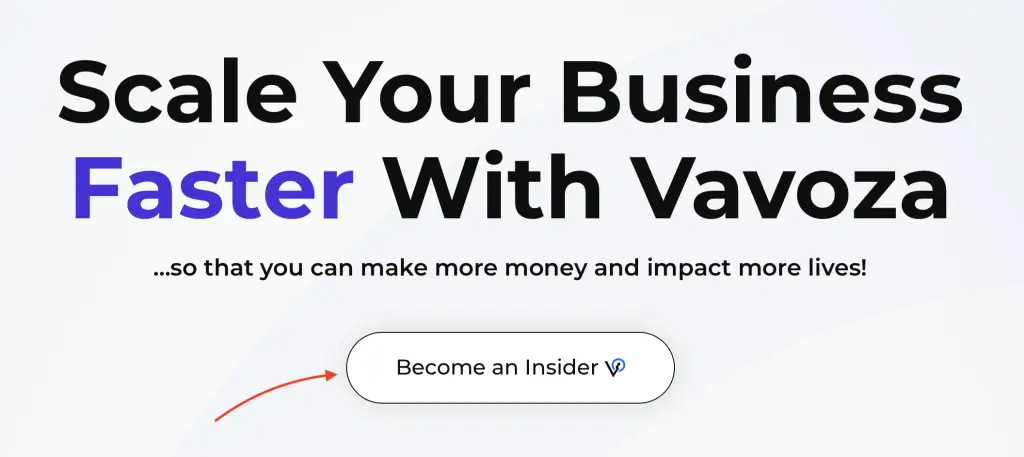
Similarly, when someone visits one of our landing pages, we tell them what action to take in exchange for a value proposition, such as entering their email to access our free guide on how to script ad videos.
And guess what? Your social media content and pages are a part of your customers’ journeys, which means they are also part of your marketing funnel.
So, streamline the customer journey touchpoints so that all your channels work cohesively as part of one holistic marketing funnel.
Next, ensure that your checkout process is as straightforward as possible. Give your customers various payment options (e.g., credit card, Link, Google Pay, Apple Pay, PayPal, etc.), and make it easy for them to buy.
- A recent study from Statista indicates that about 54% of people used Apple Pay in a POS setting.
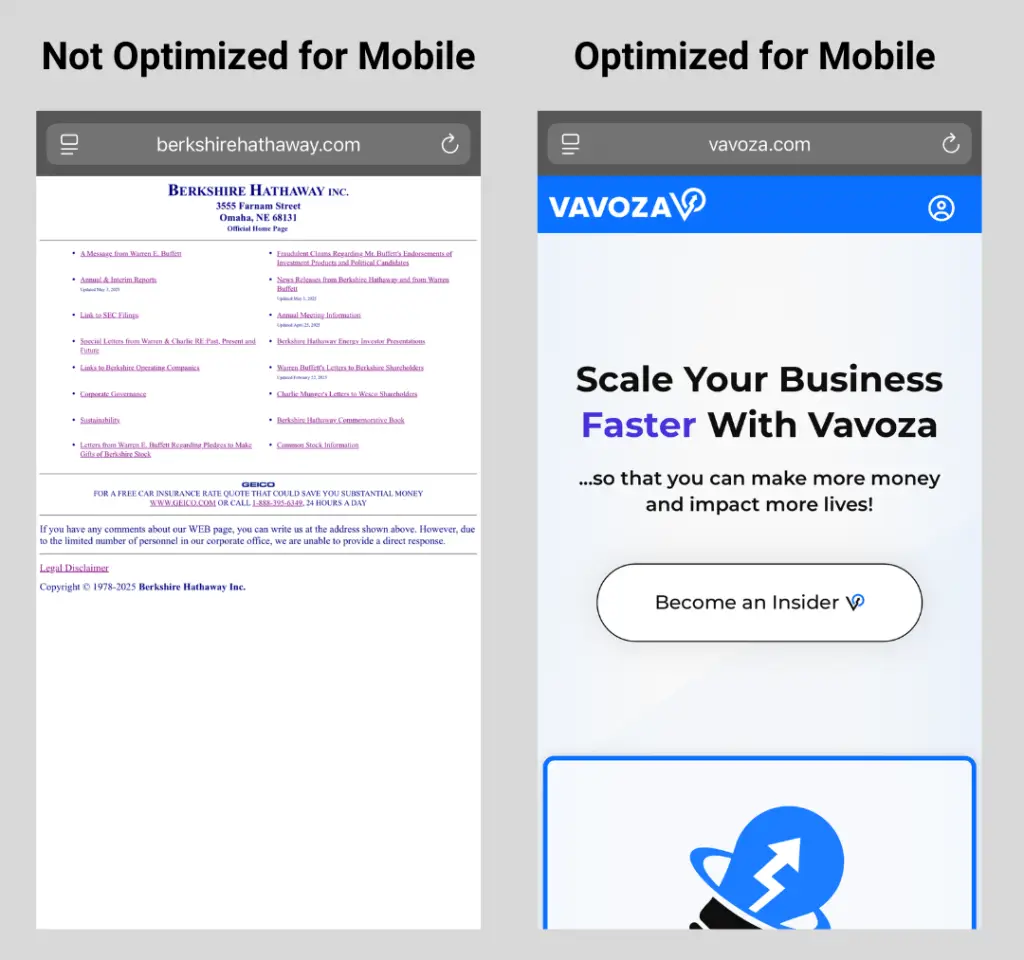
Finally, always optimize for mobile devices. According to Statcounter, over 60% of the global market share comes from mobile devices. From our experience in paid advertising, this number can be as high as 80%.
Step 4: Identify Your Primary Channels
Take note of your current channels – social media, email marketing, website, phone, chat, physical store, CRM, etc.
Once those are identified, consider which channels you can add or remove from your list to smooth out the process. To do that, see which channels perform best and keep the ones with the highest ROI.
Refer back to your ideal customer avatar from step 1, and see what other platforms they might be engaging on. Incorporate those channels into your system and start posting there daily.
In other words, pick your channels and start advertising, organically and with paid ads.
Step 5: Ensure Brand Consistency
Ensure your visual content, messaging, and voice across all platforms are cohesive and represent your brand.
Doing so will build up your brand’s image and establish recognition and trust over time. You want your audience to instantly recognize your business, regardless of the marketing channel.
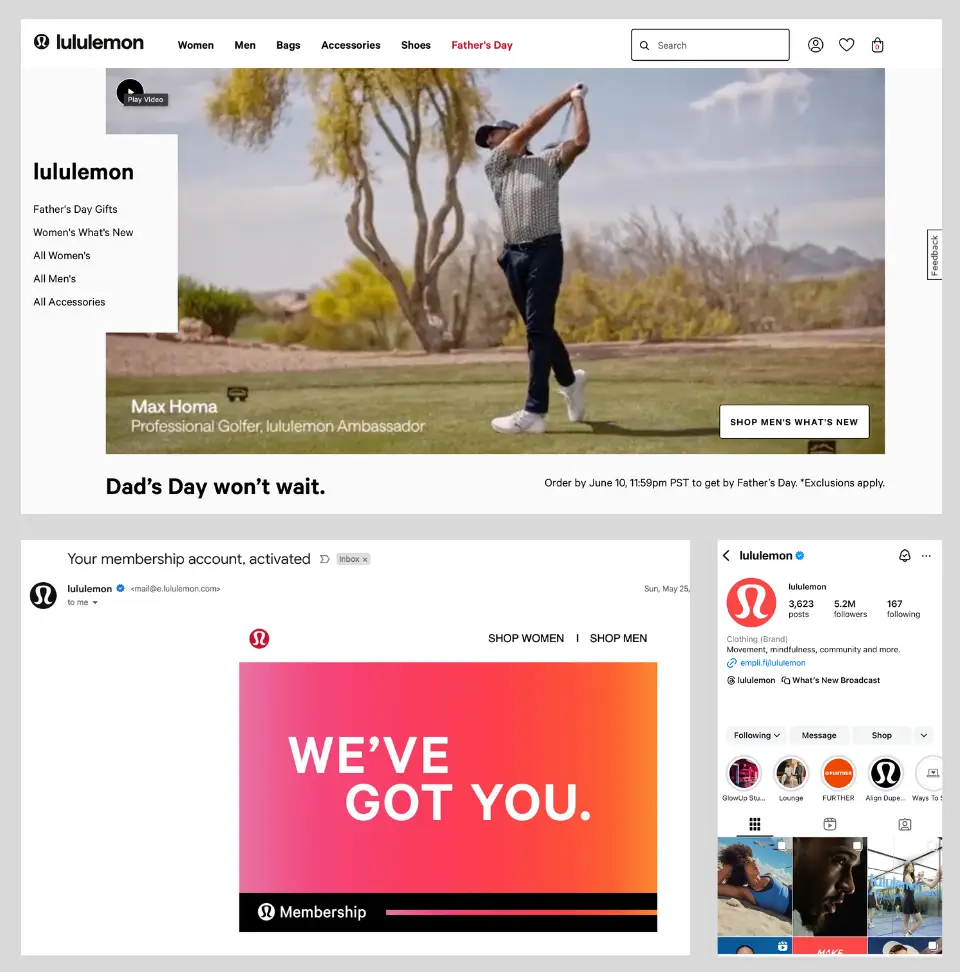
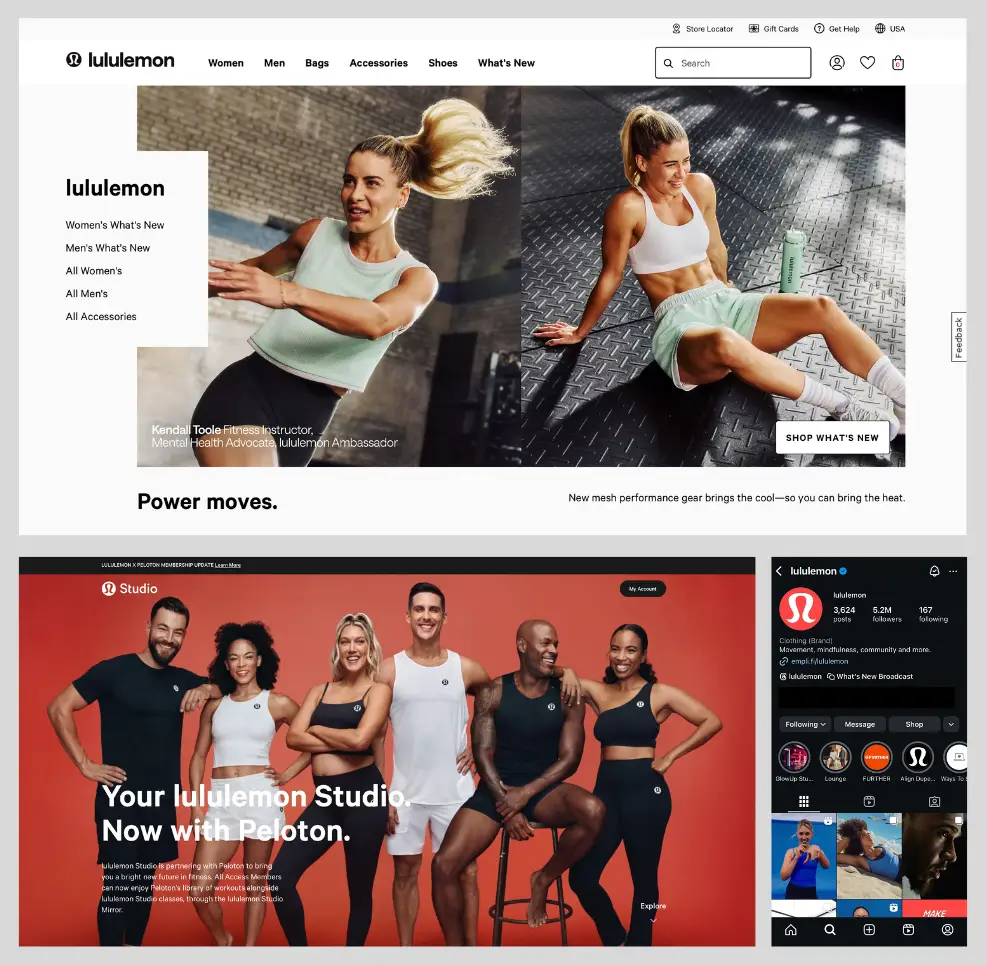
Here’s an example of cohesive branding across multiple channels (notice the matching fonts, colors, logos, and overall sporty vibe):
Step 6: Unify Customer Data
Collect and unify customer data. Don’t overthink this one – it’s simpler than it sounds. You can start with a free CRM like Zoho or HubSpot, or with a budget-friendly one like ActiveCampaign or Monday.com.
Your goal is to obtain your customers’ contact information, track interactions (consider implementing lead scoring), and track purchase history.
Also, tag people who engage with your social media content with tracking pixels on various ad platforms, and build behavior-based retargeting audiences (e.g., video viewers, subscribers, followers, etc.).
Having such information is a great start for omnichannel marketing, even if your flow isn’t perfect at first.
It’s worth noting that having “data” is not an exclusive privilege of large corporations.
Today, you can collect and use substantial amounts of customer data to make informed decisions, boost efficiency, and increase revenue.
It can be as simple as collecting customer information in your CRM and tagging people with retargeting pixels, but start collecting and unifying data sooner rather than later.
Step 7: Integrate and Automate Touchpoints
Integrate and automate your main channels. Focus on connecting several of your most effective audience and customer touchpoints. Here are some integrations to consider:
- Lead Forms: Ensure that your newsletter sign-ups, contact forms, and any inquiries that require your customers’ email addresses and other contact info feed directly into designated email lists in your CRM.
- POS System: If you have a physical location, ensure your point of sale (POS) system is connected to your CRM.
- Sequences: Send a confirmation email and/or text to anyone who signs up or makes a purchase. Also, introduce a long-term nurture sequence (share helpful tips, case studies, etc.) to warm up cold leads and convert them into buyers.
- Support Chatbot: Consider adding an AI support bot to your site to boost efficiency and customer satisfaction (particularly for quick and easy-to-resolve issues). Look into Zendesk, Zoho Desk, or ChatBot.
- Interactions: When customers contact your customer support team or message you on social media, add any relevant information from the interaction to their account in your CRM.
- Notifications: Enable website push notifications to keep your audience and customers engaged beyond social media and email. Use a tool like Subscribers to enable web and mobile push notifications for your site.
- Social Media Integration: Connect social media to your site and vice versa. If you practice social commerce, ensure the links on social media direct people to the relevant product or landing pages.
You can also integrate your social feeds or embed posts on your website, which can help boost your social media exposure and engagement.

- Social Media Management: Schedule your social media posts and manage all your accounts in one place with a tool like Later, Zoho Social, or Hootsuite.
- CTA Links: If you have multiple external links that you want to share in your social media profile, use a link organizer like Linktree or Later’s Link In Bio.
We recommend having one primary funnel-entry link where you send people from various channels. Think of it as the main entry door to your sales funnel. It can be a link to your website or your Linktree, but keep it consistent. - CTA Automation: Have you ever heard people say, “Comment the word Guide, and I will send you a free guide on how to get started with XYZ”? An automation tool like Manychat allows them to keep up with all those DMs.
- Cross-Channel Retargeting: Retarget your audiences with paid ads across different channels. For instance, retarget your YouTube video viewers on YouTube, Google Search, Display Network, Facebook, Instagram, Snapchat, TikTok, and so forth.
Retargeting isn’t only used for direct sales. It can also be used for strategic nurture campaigns, which keep your brand at the top of your target audience’s mind, build rapport and trust, influence consideration, and push leads further down your sales funnel.
Also, retargeting allows you to cross-promote your various social media accounts, ensuring that your audience follows you on multiple channels.
Step 8: Measure Performance
Measuring your omnichannel marketing performance is crucial to understanding your ROI and continuously refining your approach (or optimizing).
Here are the most critical key performance indicators (KPIs) to monitor when measuring and analyzing performance for each channel:
- Reach: The total number of users exposed to your brand across all channels over a period of time (e.g., one quarter). You want to keep growing your reach.
- Exposure Frequency: The number of times the same users are exposed to your brand across multiple channels. You want your audience to engage with your brand as much and as often as possible.
- Engagement: The total number of website visits, downloads, followers, like rates, comment rates, email open rates, click-through rates, loyalty program engagement, and any other meaningful interactions that signal audience loyalty.
Use a tool like Hotjar to track website activity and get a clearer picture of how people interact with your site and its content (which is arguably more important than third-party platforms’ content).
Just like social media platforms want your audience to stay on their platform for as long as possible, you want your audience to remain engaged on your site.
- High engagement can signal purchase intent, but not necessarily, so optimize for quality interactions from your target audience rather than unrelated ones.
- High engagement can signal purchase intent, but not necessarily, so optimize for quality interactions from your target audience rather than unrelated ones.
- Cross-Channel Conversion Rate: The percentage of total conversions attributed to a specific marketing channel (e.g., email, social media, paid ads) out of all conversions across all channels.
Cross-channel conversion rate is calculated as: (Number of conversions from a specific channel / Total number of conversions across all channels) x 100
- For example, if 50 out of 200 total conversions come from email, the email channel’s conversion rate is (50/200) x 100 = 25%
- For example, if 50 out of 200 total conversions come from email, the email channel’s conversion rate is (50/200) x 100 = 25%
- Customer Acquisition Cost (CAC): To calculate your average CAC for each channel, divide your expenses for each channel by the number of new customers acquired from each channel.
- Customer Retention & Churn Rate: The percentage of customers who continue doing business with you over a prolonged period of time vs. those who cancel or refund. Learn more about customer retention here.
To calculate the churn rate, divide the number of customers lost in a key period (such as a quarter) by the number of customers there were at the beginning of that period, and multiply the result by 100. - Front-End Revenue and ROI: The average front-end value often determines how quickly you can scale up, especially with paid ads. The more revenue you generate upfront, the more comfortable you will be spending more on ads. So, take measures to maximize your front-end revenue.
Track your front-end ROI by dividing the front-end net profit by the cost of investment. - Backend Revenue and ROI: This is crucial to scalability. You want to maximize your average customer value by selling additional offers on the backend (after the initial purchases).
Track your backend ROI holistically – combine front-end and backend net profit, divide it by the cost of investment, and multiply the result by 100. - Customer Lifetime Value (LTV): The estimated total revenue a loyal customer brings you on average over the average customer lifecycle.
- Revenue & Profit Growth Rate: Track your overall revenue and profitability trends after implementing omnichannel marketing and understand how different channels contribute to revenue generation and new profit.
To calculate the profit growth rate, take the profit from a key period (such as a quarter) and subtract the previous period’s profit. Then, divide the result by the previous period’s profit and multiply by 100. - Overall ROI: Your overall return on investment determines how profitable and scalable your business is. To calculate ROI percentage, take your total net profit, divide it by your total cost of investment, and multiply the result by 100.
Measure your performance per channel and overall so that you can make informed, data-driven decisions.
Of course, allocate higher budgets toward the top-producing channels, but if your goal is to scale high, don’t cut the less-producing ones (unless they generate a loss).
Many entrepreneurs make the big mistake of becoming hyper-focused and reliant on a specific channel or two. And when those channels stop performing, the marketing campaign and funnel become unstable and unpredictable.
So, understand your performance and use data to optimize and scale up, but don’t make rash decisions (and sometimes, go with your gut instead of data).
Omnichannel Marketing Real-Life Use Cases
Here are some examples of prominent brands that use omnichannel marketing to maximize profits:
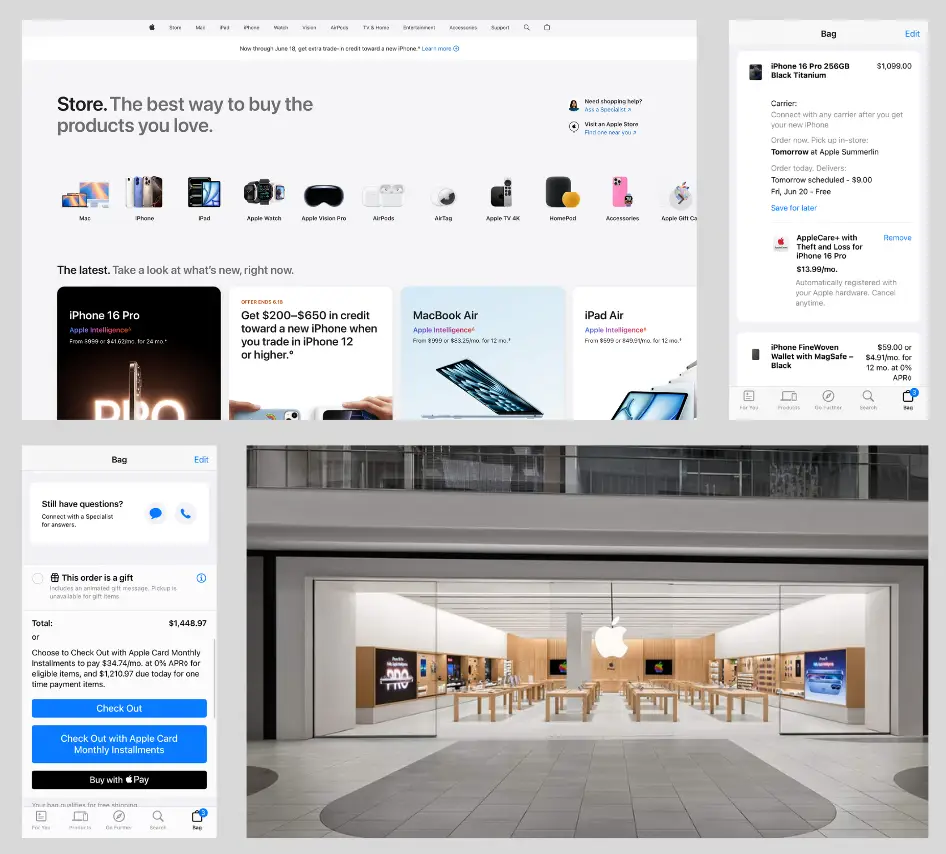
Apple
This tech giant excels at synchronizing online and offline experiences. Every customer touchpoint communicates with one another, and customers can pick up where they left off, whether they’re browsing online or in person.
Their branding is congruent, customer and tech support are efficient, personalization is a given, and the checkout process is seamless.
Lululemon
While mainly a clothing brand, Lululemon is also a lifestyle brand and community, which is what drives a significant number of its sales.
The brand’s online presence functions on multiple channels, the online and in-person shopping experience feels exclusive with the rewards program in place, personalization comes in the form of clothing and workout suggestions, and unique in-store events drive brand loyalty.
Spotify
This app is one of the best at personalizing streaming recommendations (music, podcasts, and audiobooks), and functions on multiple devices.
You can start listening on your phone, seamlessly transfer to your car entertainment system, and pick up where you left off on the web.
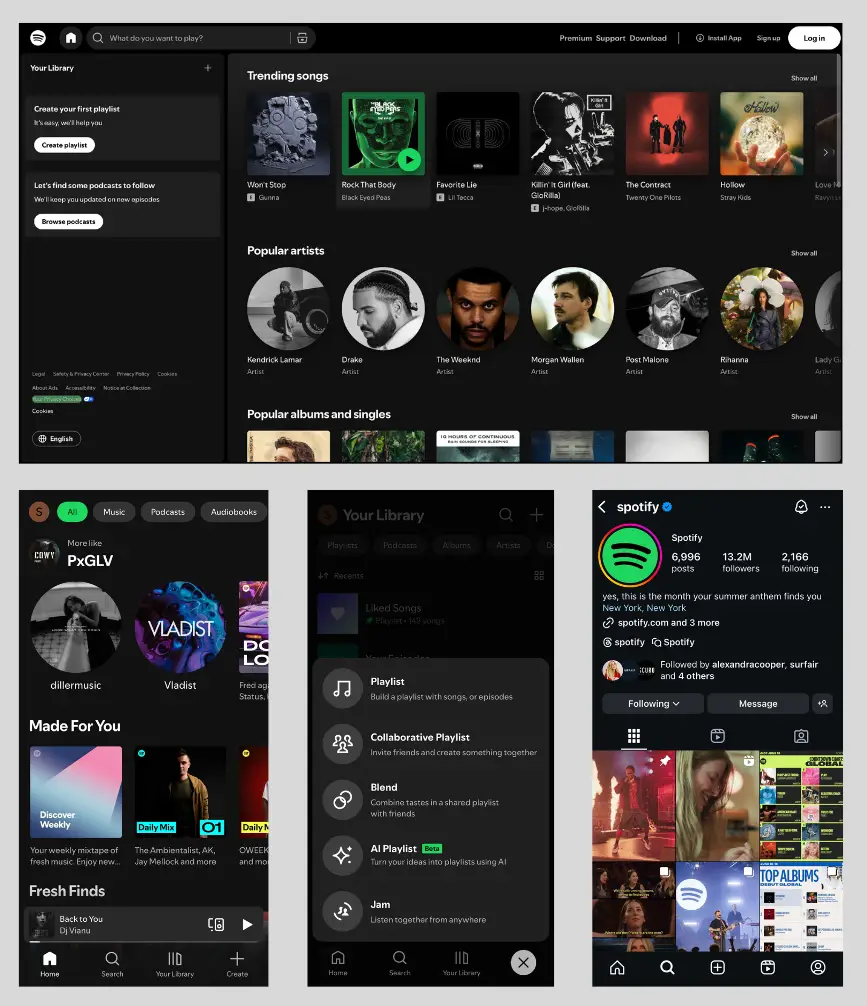
These infamous brands are excellent examples of successful omnichannel marketing implementation.
They demonstrate that this marketing strategy isn’t just about utilizing multiple channels but about a seamless customer experience, personalization, data syncing, and consistent branding.

Closing Remarks
In this article, we analyzed the omnichannel marketing strategy and shared actionable implementation tips.
However, it’s important to note that omnichannel marketing isn’t something you implement once – it requires constant refinement and adjustments.
This strategy is complex, but you can keep it simple and practical for your unique business and circumstances.
- If you’re an enterprise marketer, expand on the insights we provided in this guide (e.g., find advanced, robust tracking tools, and coordinate implementation with your appropriate departments).
- If you’re a small business owner, focus on consumer pain points and leverage the software you already use.
Most platforms marketers use come with integration capabilities, automation, and analytics features, so there is no need to splurge on tons of new tools.
Besides, Google Analytics is free and can suffice.
Successfully implementing omnichannel marketing may take time (perhaps months or even years), but you can start today by following our 8-step guide (one step at a time) and build upon it continually.
Want more actionable tips continually? Subscribe to Vavoza Insider to access the latest business and marketing insights, news, and trends daily with unmatched speed and conciseness. 🗞️
Key Contributors: Stephanie Hill, Vlad Strizheus