


In this article, we analyze the faceless content trend (and tactic) and provide you with insights, creative ideas, and actionable tips on how to use it to grow your brand.
Faceless content has been gaining popularity among creators who prefer to stay behind the scenes. Today, this trend allows creators to gain exposure and build a substantial following on platforms like YouTube, TikTok, and Instagram.
This trend prioritizes content creativity and privacy rather than the creator’s personality. Its content typically includes POV-style videos, voiceovers, animations, and other similar content types.
So, if you prefer to stay behind the scenes but still want to build a social media presence, this article is for you. Of course, this viral trend also applies to those who just want to take a break from recording themselves and need ideas for what to post.
After all, everyone needs a little pattern interrupt here and there, and faceless content just might do it, both for your audience and for yourself. 🙂
Why Is Faceless Content Popular?
From a creator’s perspective, faceless content has been gaining popularity because it offers accessibility and sustainability when it comes to content creation. Here are some of the benefits:
- Anonymity and Privacy: Faceless content allows you to maintain your privacy, whether for personal or professional reasons.
- Lower Performance Pressure: You don’t need to be camera-ready whenever you create content; instead, you can focus on your craft and provide value to your audience from behind the scenes.
- Creativity and Quality: Now that the pressure and distraction of personal appearance have been eliminated, you only have to focus on the quality of the content.
- Efficiency: Filming yourself can be exhausting and daunting, especially if you are new to the game. You might find yourself refilming a 30-second clip 15 times and still unhappy with the results.
Faceless content eliminates that, making it easier to produce more content faster and allowing you to outsource content creation if needed.
What Are Common Faceless Content Types?
Faceless content is any form of digital media in which the creator’s face is nowhere to be found, except behind the scenes (and not even there if you use AI). It can be videos, audio, images, or text.
Here are some techniques you can use to start building your online presence with faceless content:
Text-Based Visuals
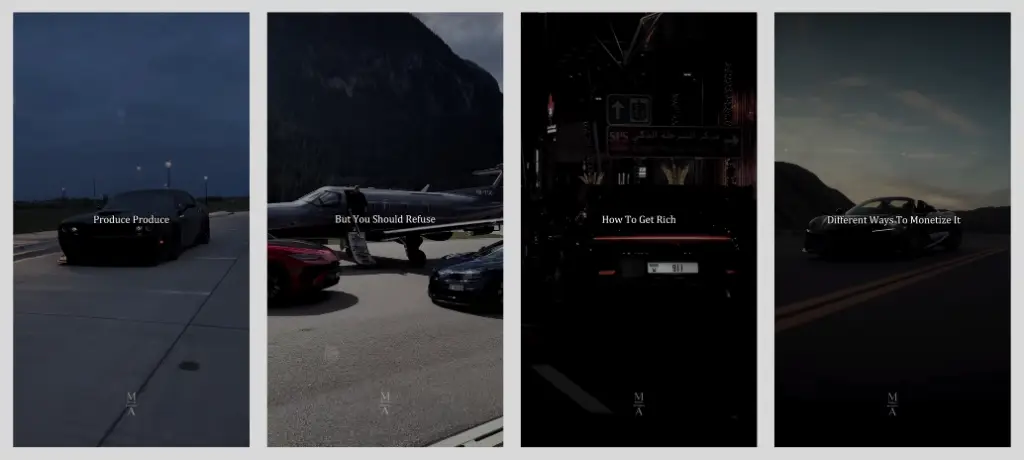
You can use text overlay on top of video clips or images. This is a good technique for storytelling and sharing information.
You can also post blogs, and if they contain actionable and concise information, you can share screenshots on Instagram and direct people to your website, Discord, or Telegram channel for the full version.

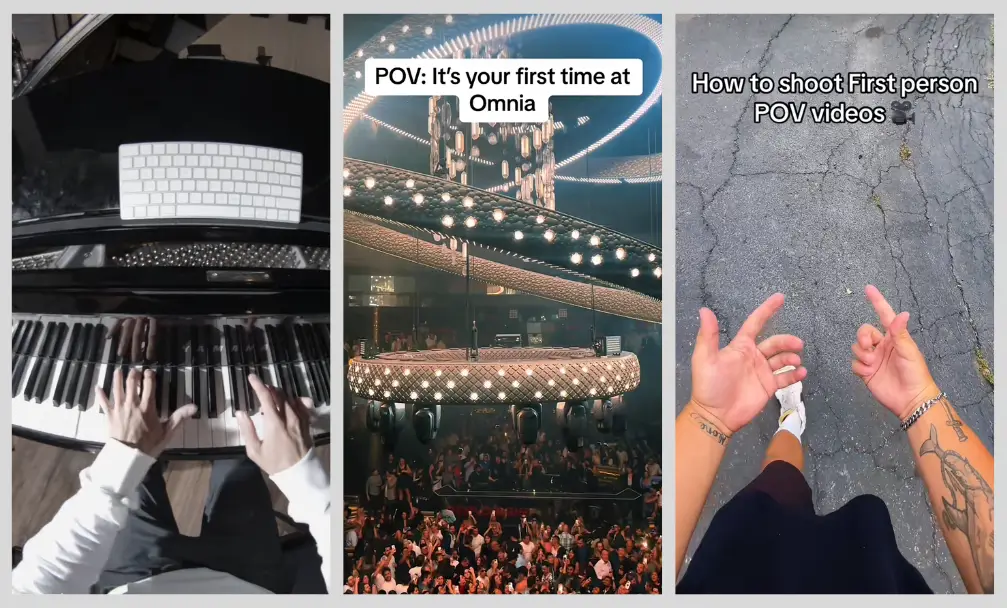
POVs
You can film something from your perspective. For example, if you are a photographer, film how you set up your camera before the shoot, what settings you use, and what you see through the camera.
Or, if your passion is cooking, you could immerse your audience in the cooking experience. Well, you get the idea!
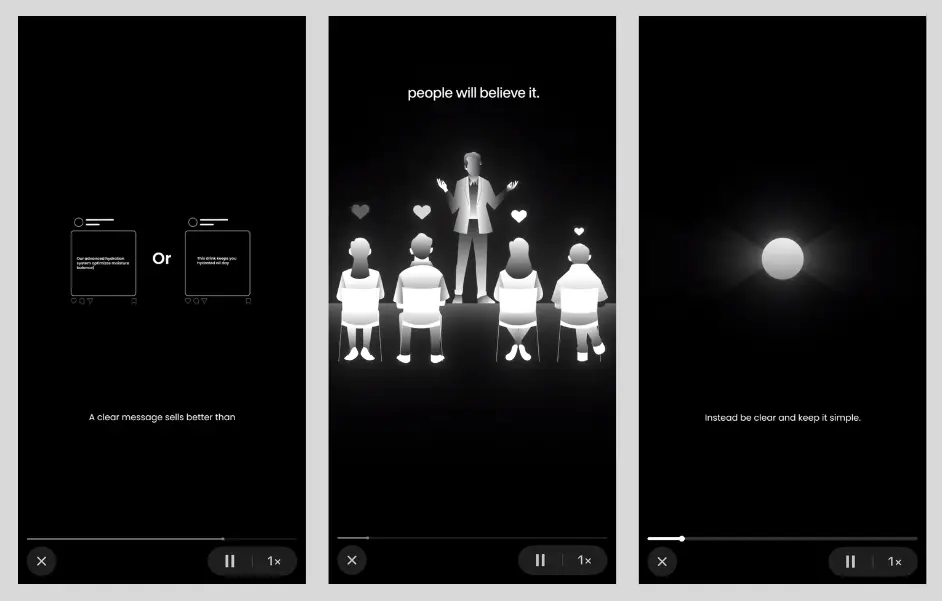
Animations and Motion Graphics
Use animations or motion graphics to explain complex concepts. Pair it with voiceovers, created either by you or narrated by an AI like ElevenLabs.
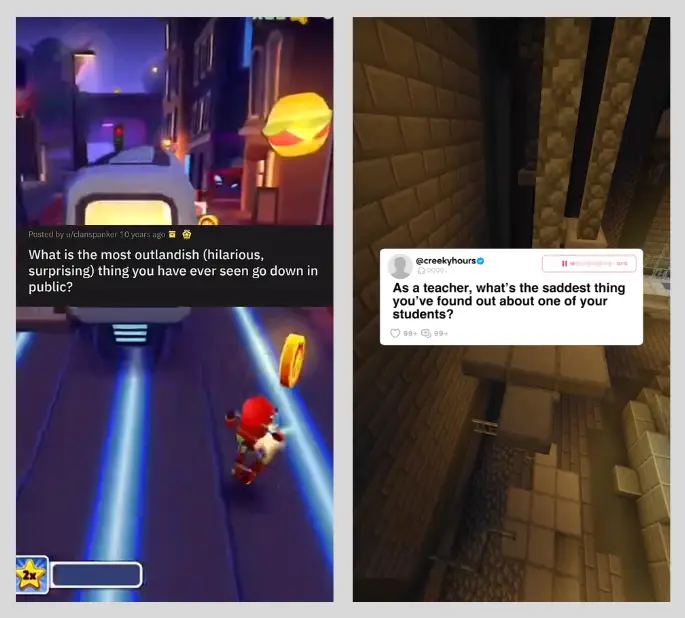
Voiceovers
You can narrate stories, tutorials, or animations. You’ve likely seen examples of people doing voiceovers and text captions on top of a Subway Surfers or Minecraft game screen recording.
Screen Recordings
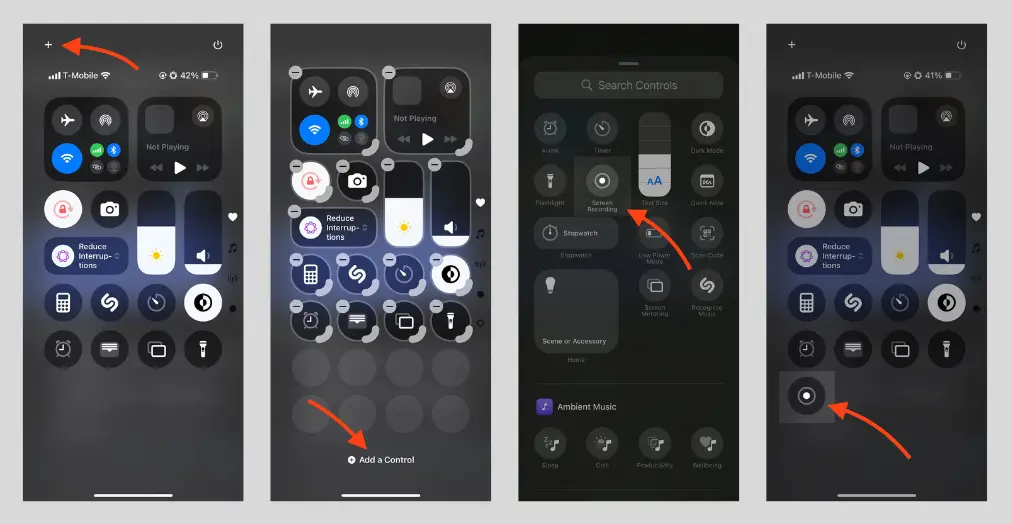
This would work great for tutorials on your info product or software. You can screen record step-by-step software and app tutorials on your desktop with a tool like Loom or on your phone with a screen recording feature.
Here is how to add it to your iPhone ⬇️
Pull down from the top right corner of your iPhone to open the control panel and follow the instructions in the following screenshots.
AI-Generated Images and Videos
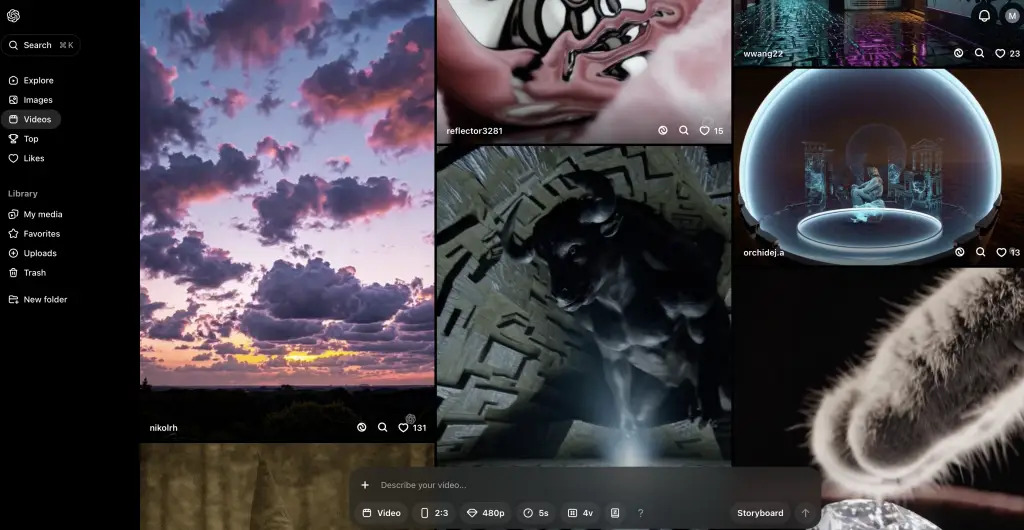
If you have cracked the code on how to talk to AI, especially for it to create imagery and videos for you, you can use social media to showcase your digital art portfolio.
You can also share tutorials and educate people on how to create such digital art.
To create AI-generated videos, use a tool like Blotato, Invideo AI, Veo 3, Runway, or Sora.
Work Showcase
If you work in a creative field or with your hands, share images, videos, and tutorials (if applicable) on your social media to market your craft to those interested in your services.
For instance, if you are a drone pilot, share videos and images captured from above. If you have a carpentry business, showcase your projects and the BTS process.

Stock Footage and Imagery
Plenty of stock footage and imagery can be used to create something new. Pair images and footage with creative storytelling and narration to engage your viewers, and plug your brand name into the storyline to build awareness.
You can use original images and videos, or edit them. If you know your way around editing software like Photoshop, Premiere Pro, FinalCutPro, and others, let your creativity and skills shine!
You can also use tools with AI capabilities, such as Facetune, Canva, CapCut, Pixlr, or Fotor, to enhance or change the original footage or imagery.
14 Creative Faceless Content Ideas That You Can Implement Today
Here is a list of faceless content ideas, broken down by platforms and different content types to help you get started with this trend. Remember, most short-form videos can be repurposed for multiple platforms.
Short-Form Videos (TikTok, Shorts, Reels)
- A day in the life: Film a POV-style video that showcases what your life looks like from your point of view. Record the scenery you witness, the shops you visit, how you make your coffee in the mornings, and which cafe is your go-to for brunch. Combine the clips into a 30 – 60-second video, add background music that fits your taste, and post.
- Screen-record a SaaS tutorial: Use your computer or phone screen to show how to do something in the software you’re promoting. You can do a step-by-step video on how to create an account, add integrations, set up automations, or focus on a specific feature.
- Record a time-lapse video: This one doesn’t require much work at all – simply record something that happens over some time and speed the video up to show the process from beginning to end. This would be a good idea for those in the photography or videography industry.
- Record your pet: You can record your pet(s) playing, eating, or doing tricks. You can also use the footage you already have or get some stock footage to combine cute clips of pets into a longer video. Cuteness is always trending.
- Record a POV of you making a healthy meal: If you are in the health and fitness industry, record a video of yourself cooking an easy and healthy meal. You can only record your hands chopping things, placing them on the pan, and assembling the plate.
- Share a short story: Come up with a video clip that represents your life (or anything you are comfortable sharing), and record an audio of yourself sharing a story about yourself or something your audience could be curious about. Combine the video and the audio and post.
- Demo your work: Use your social media to share your creative work. For instance, share your videography portfolio. You can post an already edited video, a tutorial on how you edit your videos, or the whole process from start to finish.
You can also do a POV of you recording the video, like what camera settings you use, which angles you choose and why, and what time of day is best to get similar results.
This type of content will not only show off your talent but also teach people how to do it themselves.
Posts, Text, and Carousels (Instagram, Facebook, X, and Threads)
- Quotes or affirmations: If you know quotes or affirmations that might be relatable to your audience, write them out on a post and make them look pretty.
Use a free tool like Canva to find tons of free design templates. Post carousels of however many quotes on any social media platform that supports multiple images in one post (like Instagram carousels). You can also post text on platforms like X and Threads.
The most popular quotes and affirmations typically revolve around success, self-love, motivation, relationships, friendship, mentorship, and health. - Photography: Use your social media to share your portfolio. Lauren from Salt & Light Studios is a perfect example of a successful photographer who uses Instagram (almost exclusively) to attract new clients.
- Screenshot tutorials: This would work best with something simple that doesn’t require in-depth explanation and can be presented with basic pointers. Create a series of screenshots showing people how to do something. If there are specific things they should click on or fill out, highlight them, or point an arrow at them.
- Blog previews: Post a screenshot of your blog post and direct people to the full version by clicking the link in your story. Your blog can be hosted on your website, a Telegram channel, a Discord community, etc.
Ensure that your screenshot contains enough enticing information to hook the viewer, but don’t share too many details; otherwise, people will disregard your CTA, as they might feel that they have learned enough from the screenshot. - Insights and unique thoughts: Share your thoughts and insights on books, podcasts, or events that changed your life. This type of content performs best on platforms like Threads, X, and Facebook.
- Flat-lays: This would work best for those in the e-com industry, product photography, and those who have multiple things to showcase at once (like recipe ingredients, wedding detail shots, daily makeup and skincare products, etc).
Lay out multiple products on a flat surface and snap a picture from directly above. It is a clean and aesthetically pleasing way to showcase items and tell a story at the same time. - Aesthetic pictures: Post pictures of scenic views, your life, cars, pets, clothes, city landscapes, and anything else that can be presented aesthetically.
Of course, expand on all these ideas and think through how you can make them applicable in your niche.
And yes, you can make a cute puppy video relevant to your brand – all you have to do is be creative and have fun creating unique content.

Quick Guide To Creating Engaging Faceless Content
Faceless content is a real-life testament that a good story, valuable or entertaining content, and a universal approach to your target audience can perform just as successfully as a charismatic personality and a pleasing appearance.
This trend empowers those who don’t feel confident on camera or just want to stay anonymous to share their expertise and creativity with the world.
If that resonates with you, here are some basic steps you can take to become a faceless content creator. Why basic? Because there’s no need to complicate it – this trend is easy to implement!
Step 1: Define Your Niche
Find a topic you’re either passionate about or have expertise in. This is the foundation that will help you generate unique and compelling content ideas.
Step 2: Plan Your Content
Write down the ideas and topics you will share and decide how you will present them to your target audience.
Will you create screen-recorded tutorials? Text posts? Aesthetically formatted Posts? Maybe a combination of all?
If you plan on using voiceovers, have a script or at least a bullet-list outline of what you’ll discuss. This will help keep you on track, ensure you don’t miss any important information, and make your content as concise as possible.
Step 3: Ensure Sound and Visual Quality
Your content is your brand. The sound and visual quality should be consistently presentable and clear, especially if you do voiceovers.
Ensure your visuals are not blurry, have a good (easy-to-follow) flow, and are easy on the eye.
Step 4: Stick To A Consistent Style
A consistent brand identity will help you maintain your follower count. This includes consistency in your tone if you do voiceovers, consistency in your editing style, the type of music you use in the background, and so forth.
Step 5: Engage With Your Audience
With faceless content, it is still possible to develop a sense of community for your audience by responding to comments, engaging in conversations, asking questions, and welcoming opinions and suggestions.

Closing Remarks
Today, we analyzed the faceless content trend and shared actionable content ideas and implementation tips.
As with any marketing trend, consistency is key. If you choose to implement faceless content marketing, commit to creating engaging and helpful or engaging and entertaining content on a consistent cadence.
Start by posting 3-5 times weekly, and strive for 3+ posts daily (as long as you can do it consistently).
Keep your content relevant to your niche, or you may find it challenging to monetize your audience.
Once you gain momentum, go full “pedal to the metal” and build upon it. Consider boosting your best videos with paid ads to reach more of your target audience (people who are likely to become your leads and customers).
And never stop marketing.
Want more actionable tips continually? Subscribe to Vavoza Insider to access the latest business and marketing insights, news, and trends daily with unmatched speed and conciseness. 🗞️
Key Contributors: Stephanie Hill, Vlad Strizheus